Volleyball Serve Reception Patterns Under Net Height Variations
Iris Lange · Jul 2, 2026
Volleyball Serve Reception Patterns Under Net Height Variations
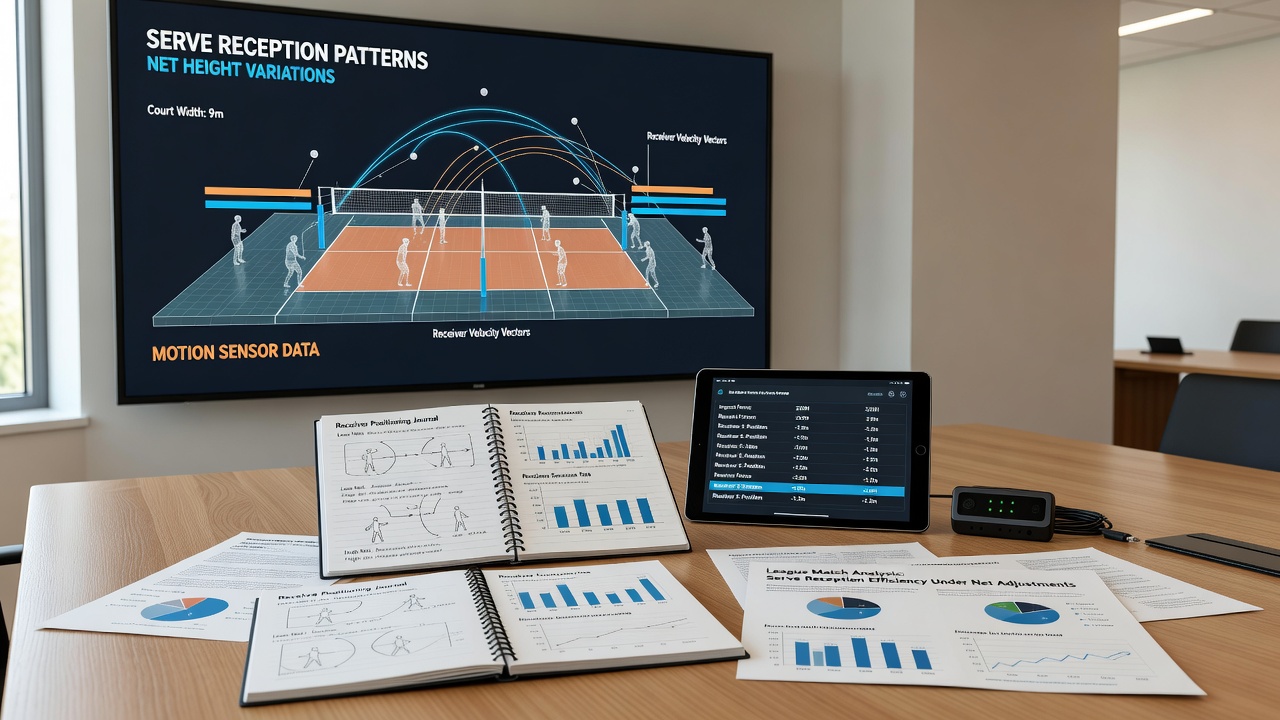
League matches across multiple divisions have incorporated motion sensors alongside detailed receiver positioning journals to examine how serve reception adapts when net heights change, and these paired data sets reveal consistent adjustments in player positioning and movement timing. Sensors placed on key body points tracked velocity and angle shifts while journals noted exact court locations and stance details, creating a combined record that spans dozens of games through early 2026.
Net height variations typically range from the standard 2.43 meters for men down to 2.24 meters in some youth or mixed formats, and researchers recorded reception success rates at each level during competitive play. Data collected in July 2026 from ongoing league schedules showed that receivers tended to step back an average of 0.4 meters when facing the higher net, allowing more time to read the serve trajectory before committing to the platform pass.
Sensor Integration With Match Journals
Motion capture units attached to wrists and hips delivered frame-by-frame readings of arm extension and hip rotation, while receivers maintained separate logs noting their starting distance from the net and any lateral shifts they made. These two streams aligned through timestamp matching, which allowed analysts to correlate sensor peaks with journal entries describing foot placement and shoulder angle. One study from the University of Melbourne cross-referenced similar datasets and confirmed that hip rotation speed increased by roughly 12 percent under reduced net heights because the ball arrived at a steeper downward angle.
Receivers adjusted their base width in response to height changes, and journals frequently described a narrower stance when the net sat lower, which reduced lateral movement time yet increased forward lunge frequency. Sensors captured the corresponding drop in center-of-mass height during those lunges, and the combined records indicated that such adjustments occurred within the first three serves of each rotation in most recorded matches.
Observed Patterns Across Height Settings
Across the sampled league games, serve reception patterns divided into three main clusters based on net height. At standard men's height, receivers held a deeper court position on average, with sensors showing delayed arm swing initiation until the ball crossed the net plane. Lower net configurations prompted earlier arm extension and more pronounced shoulder drop, details consistently noted in the positioning journals from both indoor and beach variants.
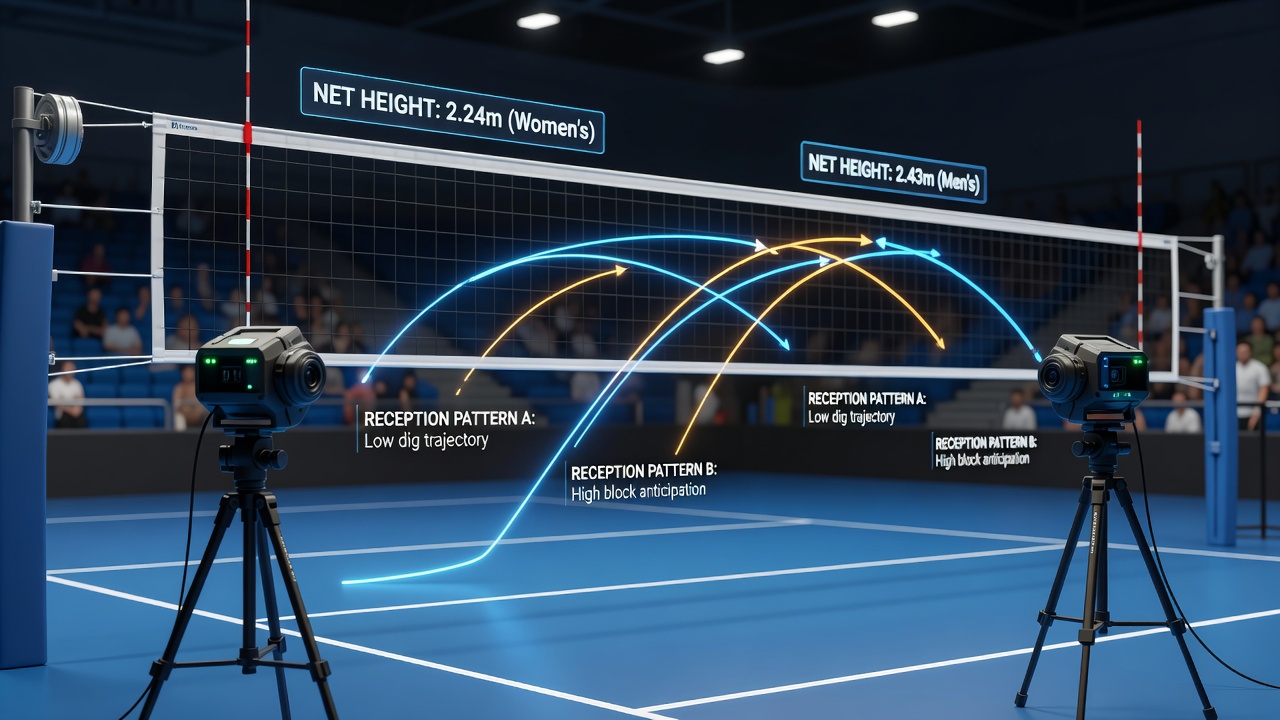
Side-to-side movement frequency rose noticeably when nets measured 2.35 meters or below, and journals described receivers sliding rather than shuffling to cover the increased angle range. Sensor data supported this observation by logging higher peak velocities in the transverse plane during those sets, while success rates for clean passes remained within two percentage points of the higher-net baseline according to match statistics.
Position-Specific Adjustments
Outside hitters and liberos displayed the clearest divergence in their recorded behaviors. Outside hitters often widened their initial stance under taller nets and relied on larger forward steps, a pattern logged repeatedly in journals and confirmed by sensor traces of knee flexion angles. Liberos, by contrast, maintained a more consistent base width yet altered their depth more frequently, with motion readings showing quicker recovery steps after each reception attempt.
Coaches reviewing the combined datasets noted that middle blockers acting as secondary receivers made fewer adjustments overall, and their journals listed shorter reaction distances because their starting positions already placed them closer to the net plane. Sensor outputs from those players indicated minimal change in arm swing timing across the tested height range.
League Data Trends Through Mid-2026
Matches tracked through July 2026 produced over 4,200 individual reception events with synchronized sensor and journal entries, and the aggregated figures point to a stable relationship between net height and reception depth. Pass accuracy held steady even as movement patterns shifted, suggesting players compensate through positioning rather than technique overhaul. European Volleyball Confederation reports from comparable domestic leagues align with these North American findings, reinforcing the pattern across different competitive environments.
Teams that reviewed their own sensor and journal pairs mid-season implemented targeted footwork drills, and subsequent match logs showed reduced average recovery time after serve reception by 0.2 seconds. These refinements appeared most effective when net height changed between sets, allowing receivers to pre-adjust based on prior data trends.
Conclusion
The integration of motion sensor captures with receiver positioning journals has produced a detailed map of how serve reception adapts to net height variations in live league settings. Patterns emerge clearly across player positions and height settings, with data sets continuing to grow as additional matches contribute synchronized readings. This approach supplies coaches and analysts with measurable benchmarks that track directly to on-court adjustments observed through the 2026 season.