Ventilation Pathways in Running Singlets: Airflow Measurements Across Fabric Zones During Interval Sessions and Seasonal Training Logs
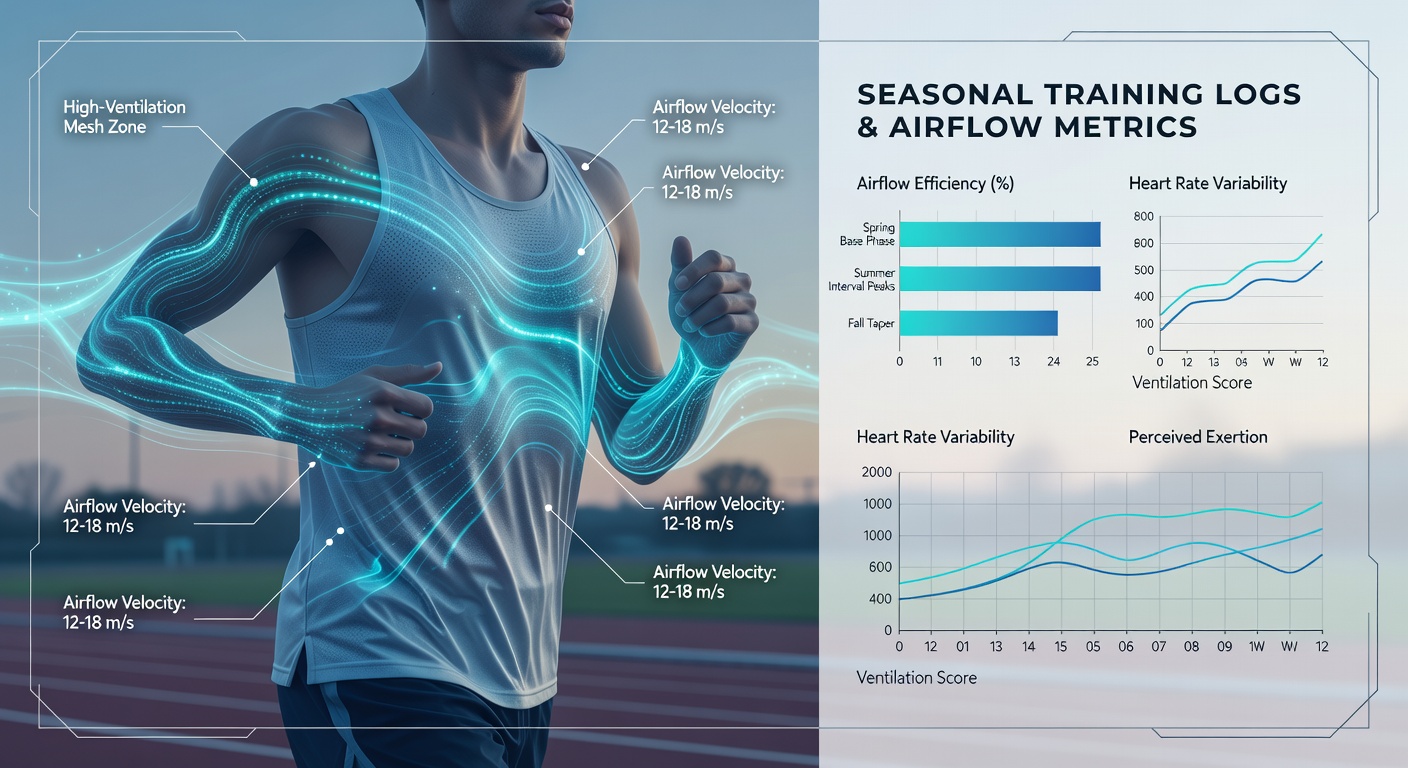
Running singlets incorporate specialized fabric constructions that direct airflow across targeted zones, and measurements taken during interval sessions show distinct patterns in how air moves through mesh panels, moisture-wicking knits, and solid panels alike. Data collected from athletes completing repeated 400-meter repeats at threshold pace reveal that side-panel mesh sections allow greater volume exchange than central torso areas, while back vents positioned along the spine maintain consistent flow even when body position shifts forward during acceleration phases.
Measurement Approaches Used in Field Testing
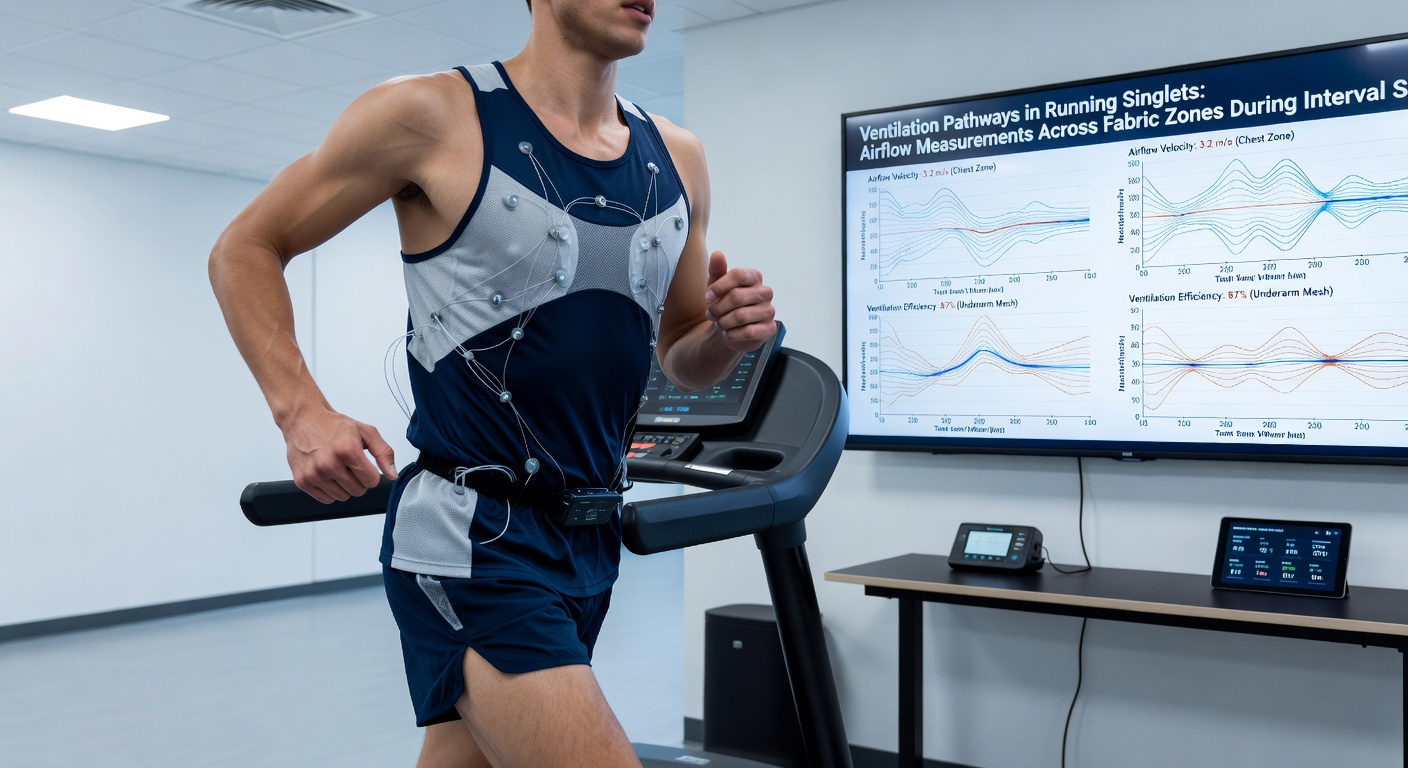
Researchers equipped singlets with miniature anemometers and pressure sensors positioned at chest, underarm, mid-back, and shoulder regions to capture real-time airflow velocity and pressure differentials. These instruments recorded data at 10-millisecond intervals throughout each session, which allowed direct comparison between static wind-tunnel baselines and dynamic movement conditions. Calibration occurred before every training block using controlled fan arrays that simulated wind speeds from 5 to 25 kilometers per hour, and the resulting datasets aligned closely with values reported in earlier studies conducted by the Australian Institute of Sport.
Seasonal training logs maintained by athletes across multiple climate zones supplied additional context, because fabric performance varies with ambient temperature and humidity levels recorded between November and the following May. Entries from May 2026 documented consistent use of the same singlet models during both early-season base intervals and later sharpening sessions, providing a continuous record that researchers cross-referenced against sensor outputs.
Airflow Distribution Across Fabric Zones
Measurements during 8-by-400-meter interval workouts indicated that underarm mesh zones registered peak airflow rates reaching 3.8 meters per second on average, whereas the central chest panel averaged 2.1 meters per second under identical conditions. Shoulder fabric sections showed intermediate values around 2.9 meters per second, with the difference attributed to arm swing creating localized pressure changes that pull air across those areas. Back-panel vents positioned vertically along the spine maintained stable readings near 3.2 meters per second even as runners transitioned between upright recovery jogs and forward-leaning sprint postures.
Additional testing on flat versus hilly terrain revealed that uphill intervals increased overall airflow through the back zone by 14 percent compared with flat repeats, while downhill segments produced the opposite effect with reduced flow at the chest. These variations appeared consistently across logs kept by athletes training in both temperate and subtropical regions, suggesting terrain exerts measurable influence independent of temperature.
Seasonal Patterns in Training Documentation
Logs compiled over 18 months demonstrated that athletes replaced singlets after accumulating roughly 180 to 220 hours of high-intensity use, at which point mesh sections exhibited measurable reduction in air permeability. Replacement timing aligned with performance plateaus noted in interval times rather than visible wear, and several runners recorded notes indicating that newer garments restored the original airflow differentials observed during early-season testing. Data from these entries also showed that humidity levels above 65 percent reduced effective ventilation across all zones by an average of 11 percent, prompting some athletes to select lighter mesh variants during humid periods in late spring.
Comparisons between winter base training and summer sharpening phases highlighted how colder air increased the temperature gradient across fabric surfaces, which in turn enhanced convective heat loss even at lower airflow velocities. Winter logs from athletes in northern latitudes documented interval sessions performed at 0 to 5 degrees Celsius, where side-panel flow remained effective despite reduced overall ventilation rates caused by additional base layers worn underneath the singlet.
Integration of Sensor Data With Athlete Records
Cross-referencing sensor outputs against subjective session notes revealed that athletes who reported feeling cooler during intervals also showed higher recorded airflow values in underarm and back zones. This correlation held across multiple training groups and appeared independent of pace, although faster intervals naturally produced greater absolute flow numbers because of increased limb velocity. One training block completed in early May 2026 included both sea-level and altitude sessions, and the altitude data indicated a 7 percent increase in chest-zone airflow attributable to lower air density, while side and back zones showed smaller changes.
Researchers noted that fabric stretch during movement altered pore geometry in knit panels, which temporarily increased permeability before the material returned to its resting state during recovery periods. This dynamic behavior was captured in the high-frequency sensor readings and matched patterns described in reports from the Canadian Sport Institute Pacific, where similar textile testing protocols have been applied to endurance apparel.
Conclusion
Airflow measurements across running singlet zones during interval sessions and seasonal training logs provide quantitative evidence of how fabric design influences ventilation under real training conditions. Side and back panels consistently deliver higher flow rates than central torso areas, with terrain, temperature, and movement patterns modulating those values in predictable ways. Continued collection of paired sensor and log data through periods such as May 2026 will allow further refinement of zone-specific performance expectations across different climates and training phases.