Tracking Basketball Shoe Degradation Through Pressure Analysis in Local League Play
Erik Brooks · Jul 18, 2026
Tracking Basketball Shoe Degradation Through Pressure Analysis in Local League Play
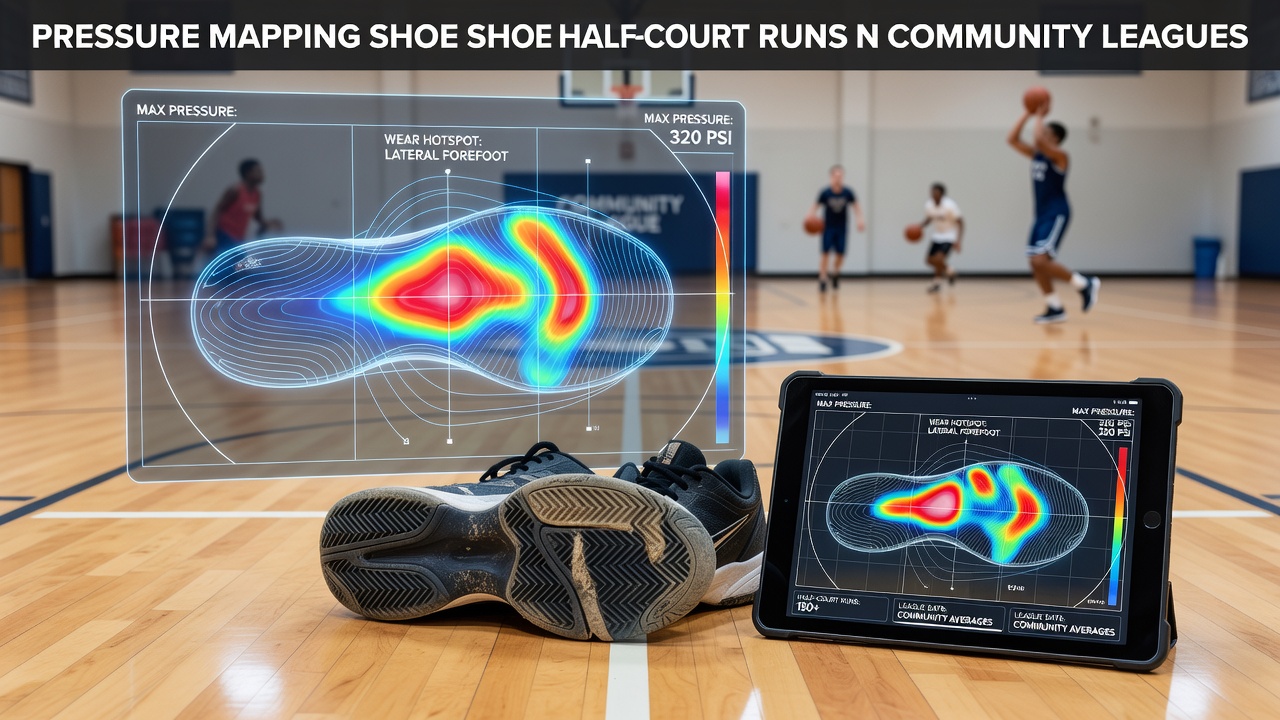
Community basketball leagues across various regions continue to generate valuable data on footwear performance, and pressure mapping technology has emerged as a key tool for examining how shoes respond to repeated half-court movements. Researchers apply thin sensor mats inside standard basketball shoes to capture force distribution during sprints, pivots, and stops that define these games. Data collection focuses on community settings where players often use the same footwear for multiple sessions per week without professional oversight.
Method Behind the Measurements
Teams equip participants with pressure-sensitive insoles that record peak pressures and contact times at 100 frames per second. Half-court runs typically last four to six minutes per segment, and studies repeat these drills across multiple weeks to build cumulative wear profiles. The approach records both initial contact forces at the heel and sustained loads across the forefoot during directional changes. Observers note that community courts often feature slightly uneven surfaces compared with professional arenas, which influences how forces travel through the outsole.
Equipment calibration occurs before each session using known weight standards, and researchers cross-reference readings with video footage to match pressure spikes with specific actions like crossover dribbles or defensive slides. This combination allows precise mapping of areas that experience the highest abrasion rates over time.
Observed Wear Patterns in Outsoles
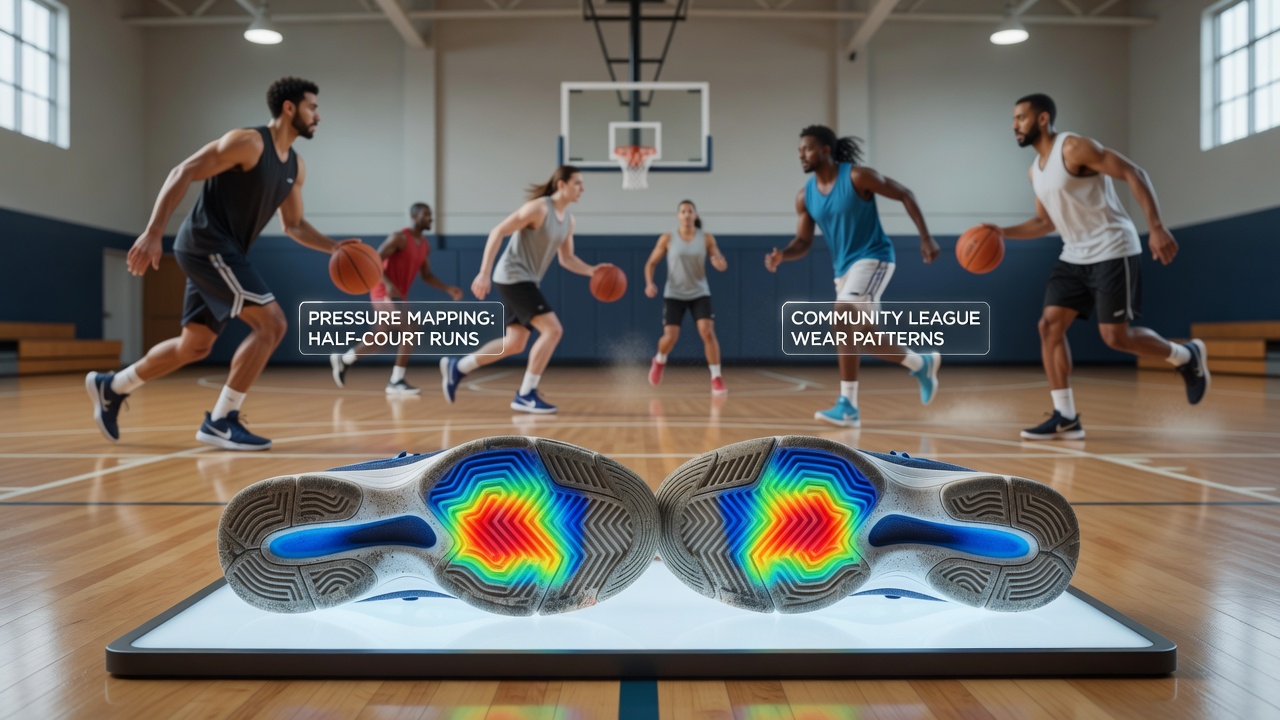
Results show consistent concentration of material loss along the medial forefoot and lateral heel zones. Players generate peak pressures exceeding 300 kilopascals during quick stops, and these locations align with the zones where rubber thickness decreases most rapidly after 20 to 30 hours of play. The central midfoot region maintains more even pressure distribution, resulting in slower wear rates there.
Additional measurements indicate that toe-off phases produce elevated shear forces that accelerate tread degradation near the big toe area. Community league schedules often include back-to-back games on the same evening, which compounds fatigue in those specific outsole sections before players can rotate footwear.
Comparisons Across Different Court Conditions
Studies conducted on wooden indoor floors versus outdoor asphalt surfaces reveal measurable differences in wear acceleration. Asphalt courts increase overall pressure readings by roughly 15 percent during lateral movements, while indoor surfaces produce longer contact times that shift load patterns slightly forward. Data collected through July 2026 continues to track seasonal variations as humidity and temperature affect both court grip and shoe rubber properties.
One research group from the University of Sydney has published findings on similar force patterns in court sports, noting how repeated half-court exposure creates predictable abrasion lines that manufacturers could address through targeted rubber compounds. Those reports appear alongside work from the European College of Sport Science that examines comparable metrics across multiple playing surfaces.
Implications for Footwear Design and Maintenance
Pressure data helps identify opportunities for reinforced zones without adding unnecessary weight. Manufacturers have begun incorporating higher-durometer rubber strips in the medial forefoot based on aggregated community league readings. Players who track their own mileage often discover that rotating two pairs extends overall outsole life compared with relying on a single set.
Maintenance logs from league participants show that regular cleaning of debris from tread grooves reduces the rate at which small cuts propagate under repeated loading. Pressure mapping also highlights how certain pivot techniques distribute forces more evenly, though individual movement styles vary widely across recreational groups.
Future Applications in Community Sports
Ongoing projects integrate wireless pressure sensors with smartphone apps that alert users when cumulative wear thresholds approach critical levels. These systems draw from the same datasets gathered during half-court testing and aim to reduce injury risk associated with overly worn outsoles. Community programs in several countries now incorporate basic pressure mapping demonstrations during equipment fitting sessions to educate players on when replacement becomes necessary.
Conclusion
Pressure mapping continues to provide clear, quantifiable insights into how basketball shoes degrade under the demands of community half-court play. The patterns identified through sensor data align closely with observed material loss, offering manufacturers and players concrete information for improving durability and rotation strategies. As testing extends through additional seasons, the accumulated records support more precise design adjustments tailored to recreational rather than elite usage profiles.