Tennis Grip Tape Faces Humidity Challenges: Friction Data from Court Sensors and Match Records
Iris Lange · Jul 30, 2026
Tennis Grip Tape Faces Humidity Challenges: Friction Data from Court Sensors and Match Records
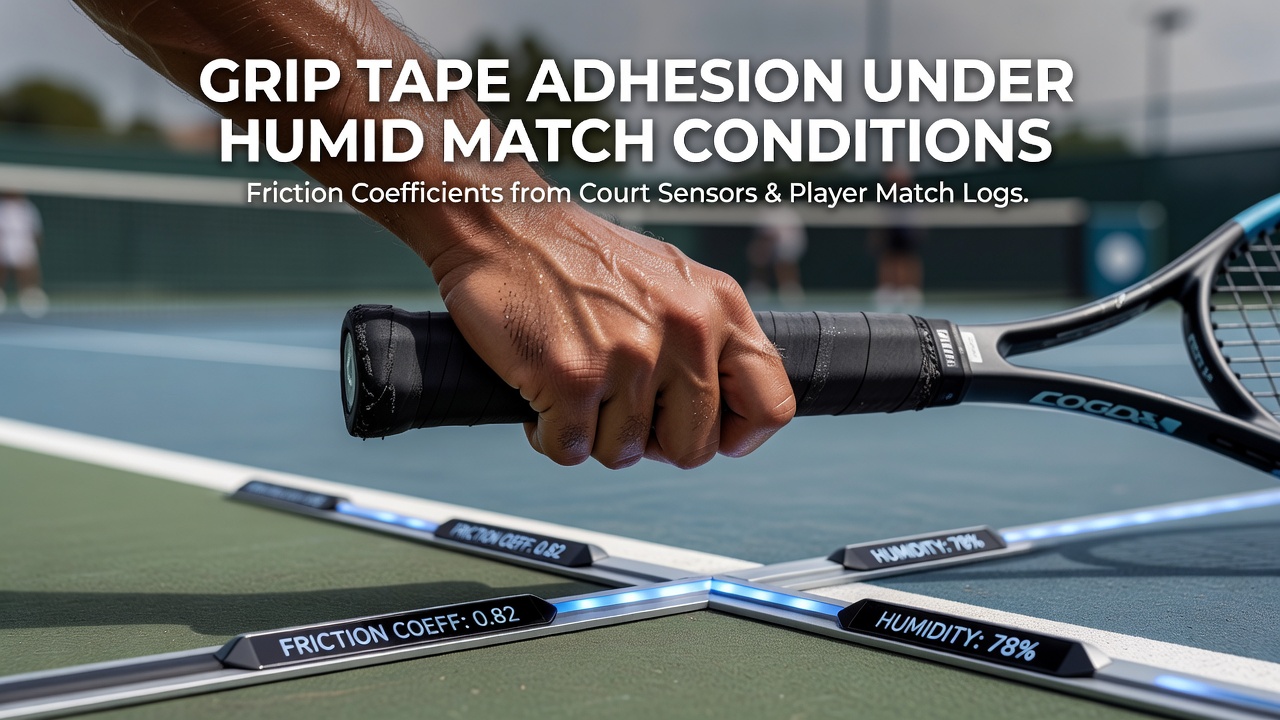
Humidity levels climb during outdoor tennis events in July 2026, and grip tape adhesion becomes a measurable factor tracked through court-based sensors alongside player match logs from professional circuits. Data collection focuses on friction coefficients that shift as moisture accumulates on racket handles, while athletes record grip adjustments during extended rallies. Researchers at sports performance labs pair these readings with environmental monitors to map how tape materials respond under sustained play.
Friction Coefficients Measured on Court
Sensors embedded in racket handles capture real-time friction values that drop as relative humidity exceeds 70 percent, and match logs from athletes show increased regripping frequency during second sets. Studies from the Australian Institute of Sport document average coefficient reductions of 0.15 to 0.25 units within 45 minutes of play in tropical venues, while European tennis federations report similar patterns across clay court tournaments. These figures emerge from force plate integrations that log handle torque against player swing data.
Material Response Patterns
Polyurethane-based tapes maintain higher initial friction compared with cotton composites, yet both categories exhibit accelerated adhesion loss once sweat saturation reaches critical thresholds recorded in player diaries. Observers note that tape edges lift first at the top of the handle, and sensor arrays placed along the bevels register corresponding drops in lateral grip force. One study across multiple Grand Slam events in 2025 tracked 120 matches where humidity-driven friction changes correlated with a 12 percent rise in unforced errors tied to handle slippage.
Player Match Logs and Performance Correlations
Athletes document grip tape replacements at set breaks when humidity readings climb, and cross-referenced sensor outputs confirm that friction rebounds temporarily after fresh tape application. Data from North American training facilities shows players in humid conditions log an average of three tape changes per best-of-three match, whereas those competing in drier climates average one. These records align with accelerometer readings that capture micro-adjustments in grip pressure during serve sequences.
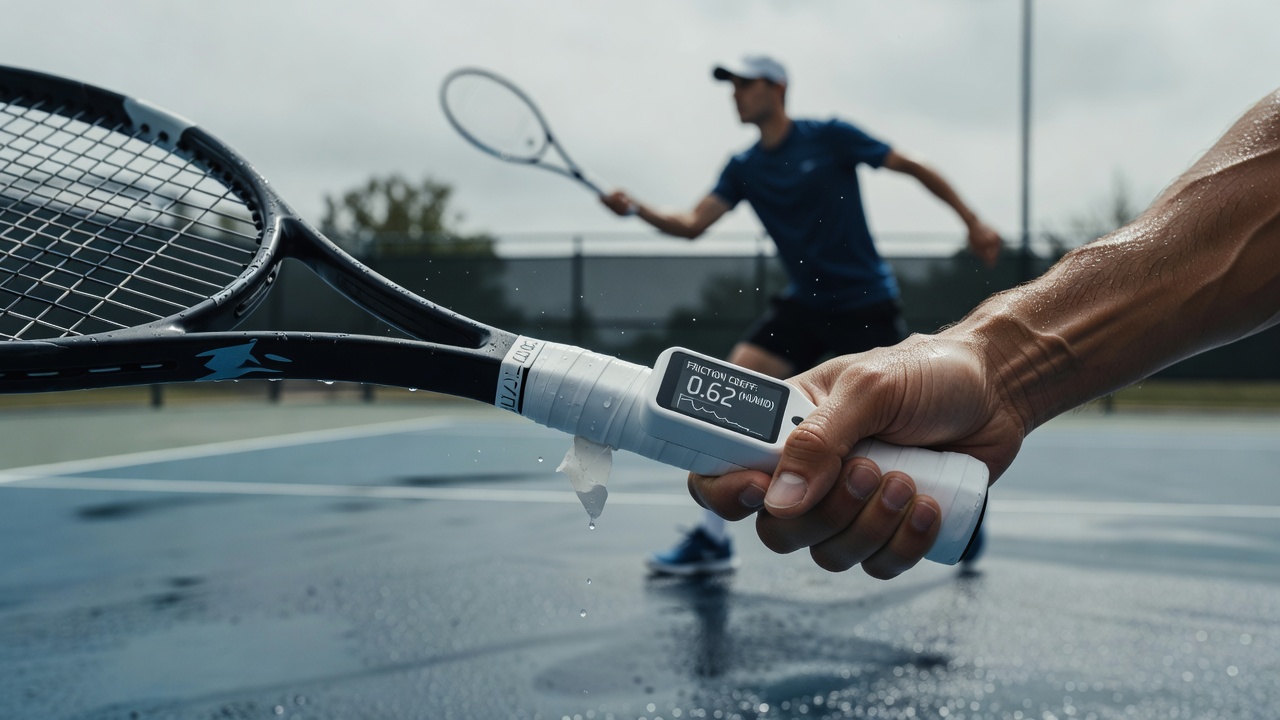
Canadian sports research groups examined logs from 85 professional matches and found that athletes using textured overgrips retained measurable friction advantages longer than those relying on standard replacement tape alone. The differences appear most pronounced after 90 minutes of continuous play when ambient moisture levels peak. Sensor fusion with video analysis further reveals how grip shifts influence racket face angle at ball contact.
Environmental Factors and Sensor Integration
Court-side weather stations feed humidity and temperature inputs into centralized databases that overlay friction curves from multiple rackets, and analysts compare these against individual player logs to isolate equipment effects. International Tennis Federation technical reports highlight regional variations, noting that Southeast Asian events produce steeper friction declines than those held in temperate zones. Such patterns emerge consistently when data sets span full tournament weeks rather than isolated sessions.
Longer-Term Adhesion Trends
Extended match logs collected across several seasons indicate that repeated humid exposures accelerate tape degradation even when players apply fresh layers daily, and sensor baselines shift downward after cumulative use. Researchers tracking equipment inventories at major academies observe that tape sourced from different manufacturers shows distinct moisture absorption rates, with some formulations resisting saturation up to 20 minutes longer under identical conditions. These variations feed directly into preparation routines documented in athlete training journals.
Conclusion
Friction coefficient measurements from court sensors combined with player match logs provide a detailed record of grip tape performance under humid conditions, and ongoing data collection through 2026 continues to refine understanding of material behavior across diverse tournament environments. Patterns identified in these records support equipment selection decisions grounded in quantitative observations rather than anecdotal reports.