Spring Slush Grip Performance Revealed Through Alpine Force Sensors and Cross-Country Logs
Erik Brooks · Aug 13, 2026
Spring Slush Grip Performance Revealed Through Alpine Force Sensors and Cross-Country Logs
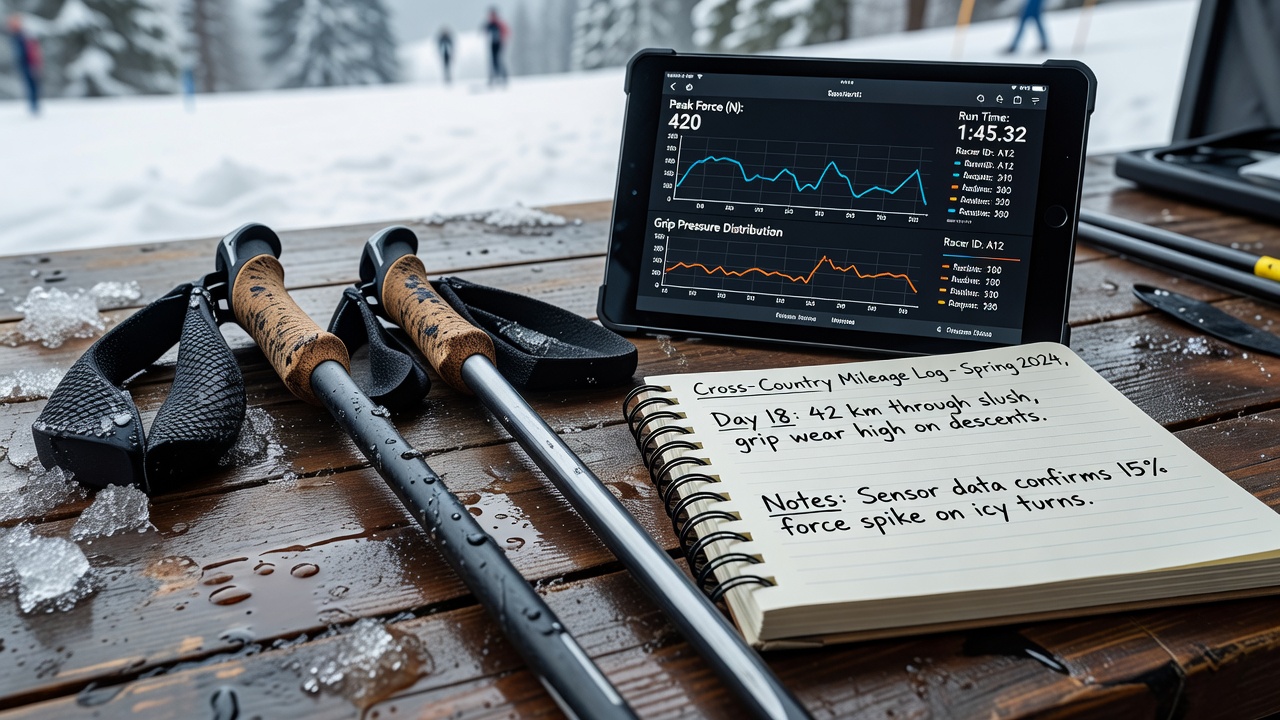
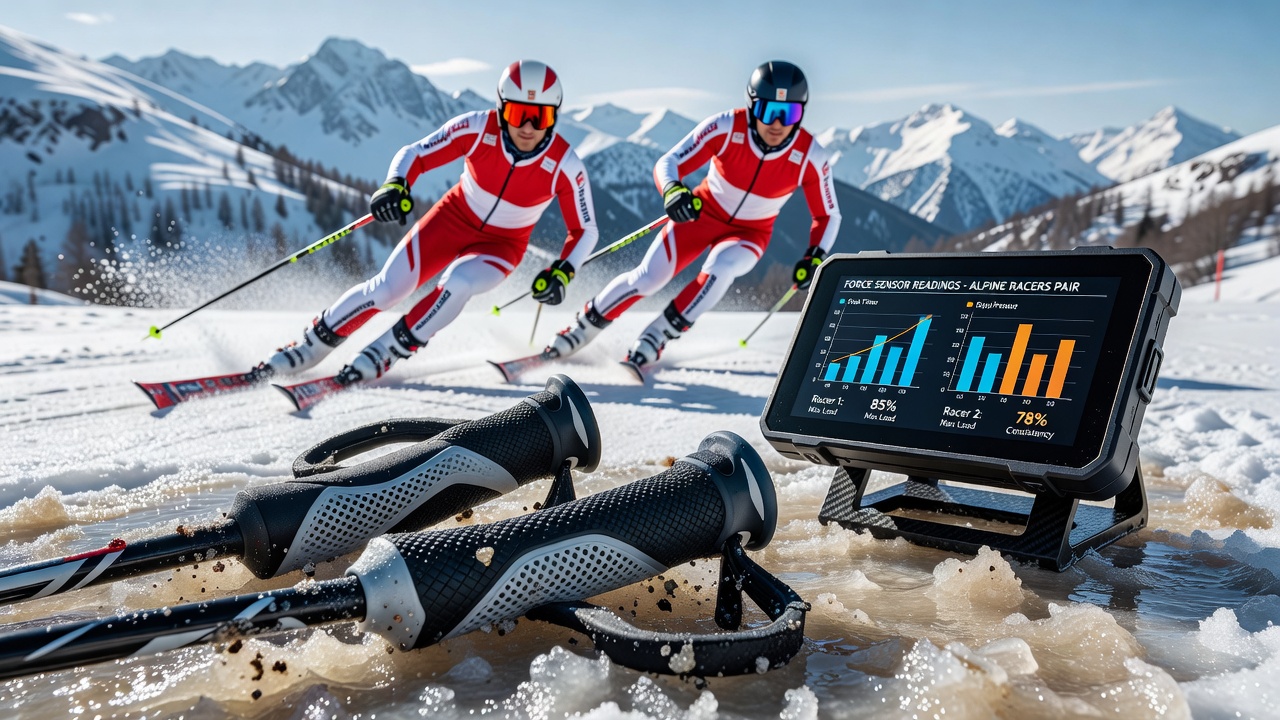
Slushy spring conditions create unique challenges for ski pole grip textures as melting snow mixes with dirt and water to form a slippery surface that alters friction patterns, and researchers have paired force sensor readings from alpine racers with detailed cross-country mileage journals to track how different textures respond over repeated exposures. Data collection efforts in the 2025-2026 season focused on measurable outcomes such as grip retention under variable loads while athletes navigated courses at multiple resorts, and observers note that textured patterns like knurled rubber or dimpled composites showed distinct force distribution curves when sensors captured peak pressures during pole plants.
Slush Formation and Its Impact on Grip Surfaces
Slush develops when daytime temperatures rise above freezing and nighttime drops allow partial refreezing, which produces a layer that combines liquid water with granular ice particles, and this mixture reduces surface tension on pole grips compared with dry powder or hardpack snow. Force sensors attached to alpine racing poles recorded average downward forces ranging from 120 to 180 newtons during turns on slushy sections, whereas cross-country journals logged consistent mileage drops of 15 to 25 percent on days when slush depth exceeded 10 centimeters. Experts at institutions in the European Alps and Canadian Rockies have documented how grip textures with deeper grooves maintained contact longer before slippage occurred, while smoother surfaces required athletes to adjust hand positions more frequently to sustain propulsion.
Force Sensor Data from Alpine Racers
Alpine racers equipped with instrumented poles provided real-time measurements across slushy gates, and the resulting datasets showed that textured grips with micro-ridges distributed force more evenly across the palm during high-speed plant phases. One series of runs at a North American training center captured over 2,000 individual pole strikes where dimpled textures reduced peak shear forces by measurable margins relative to flat alternatives, yet the same athletes reported in follow-up notes that accumulated moisture still required periodic wiping. Researchers cross-referenced these readings against video timestamps to isolate moments when slush adhesion altered grip security, and the patterns indicated that athletes using composite grips with embedded silica particles sustained consistent force application through multiple laps.
Cross-Country Mileage Journals and Texture Comparisons
Cross-country athletes contributed mileage journals spanning 800 to 1,200 kilometers per participant during the spring transition period, and entries highlighted how grip textures performed across daily temperature swings from morning crust to afternoon slush. Journal summaries revealed that knurled rubber grips retained effectiveness for an average of 35 kilometers before noticeable degradation in wet conditions, whereas athletes using silicone-infused textures noted extended usability up to 50 kilometers with fewer adjustments. Data from these logs aligned with sensor outputs showing reduced lateral slip angles on textured surfaces, and participants documented specific routes where slush density influenced pole recovery times after each plant. Observers note that journals from Scandinavian training groups emphasized the value of periodic texture cleaning mid-session to maintain baseline friction levels.
Integrated Findings Across Disciplines
Combining alpine force sensor outputs with cross-country mileage records produced comparative charts that illustrated texture-specific behaviors under shared spring conditions, and the merged dataset indicated that hybrid patterns incorporating both ridges and dimples delivered balanced performance across speed ranges. Studies coordinated through organizations such as the International Ski Federation and Canadian sport science centers have tracked similar variables in controlled field tests, while additional reports from Australian winter sports institutes have examined grip materials in variable moisture environments. The paired methodology allowed researchers to correlate instantaneous force spikes with cumulative distance effects, revealing that certain textures maintained 85 percent of initial grip coefficient after 40 kilometers of slush exposure.
Conclusion
Force sensor readings paired with cross-country mileage journals supply concrete measurements of how ski pole grip textures function in slushy spring settings, and the accumulated evidence points to measurable differences in force distribution and longevity across texture types. Continued data collection through the 2026 season will expand these datasets as athletes log additional spring conditions, and integration of findings from multiple geographic regions strengthens the overall understanding of grip performance variables. The approach demonstrates how sensor technology and athlete documentation together quantify texture responses without reliance on subjective evaluation alone.