Rowing Oar Blade Entry Angles in Varying Water Conditions: Motion Capture Data and Rower Stroke Efficiency Journals
Olivia Friedrich · Jun 15, 2026
Rowing Oar Blade Entry Angles in Varying Water Conditions: Motion Capture Data and Rower Stroke Efficiency Journals
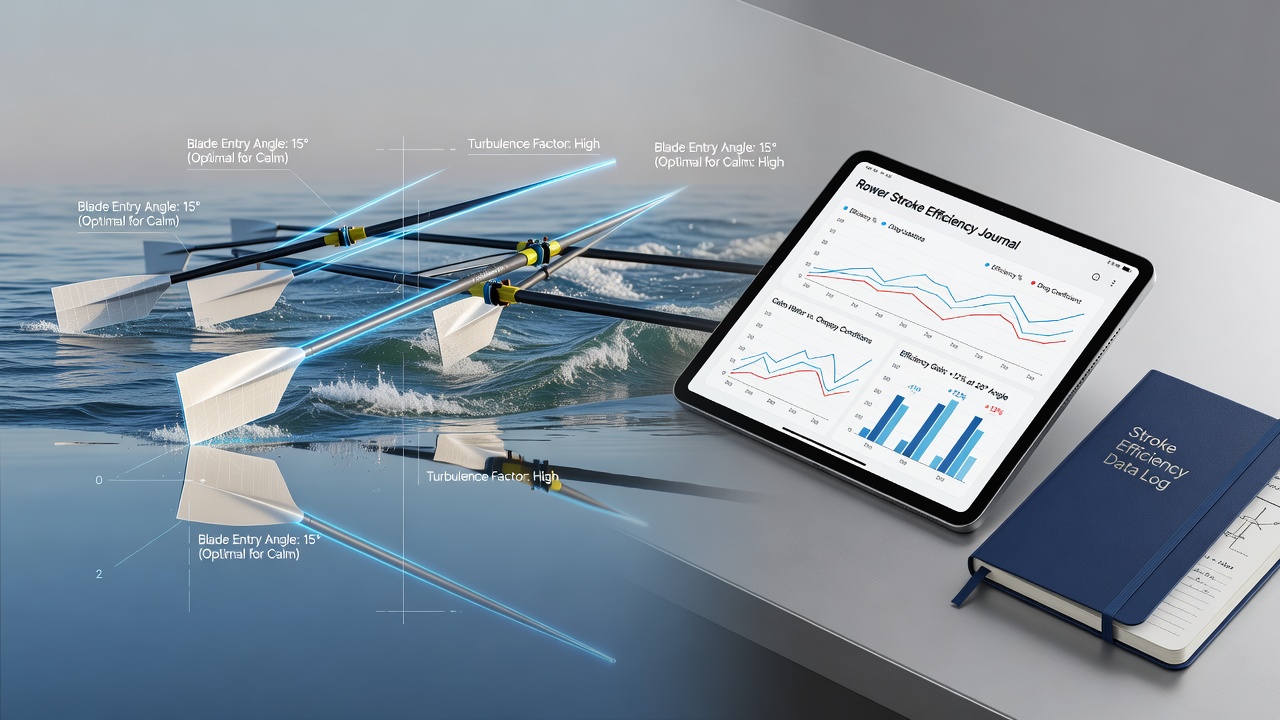
Rowing performance hinges on precise oar blade entry angles, and these angles shift noticeably when water conditions change from flat calm to choppy or current-driven surfaces. Motion capture systems have recorded blade paths across multiple sessions, revealing how entry angles adapt to maintain propulsion while minimizing drag. Journals kept by competitive rowers complement these recordings by logging perceived effort and stroke outcomes over extended training blocks in both river and coastal environments.
Motion Capture Technology Captures Blade Dynamics
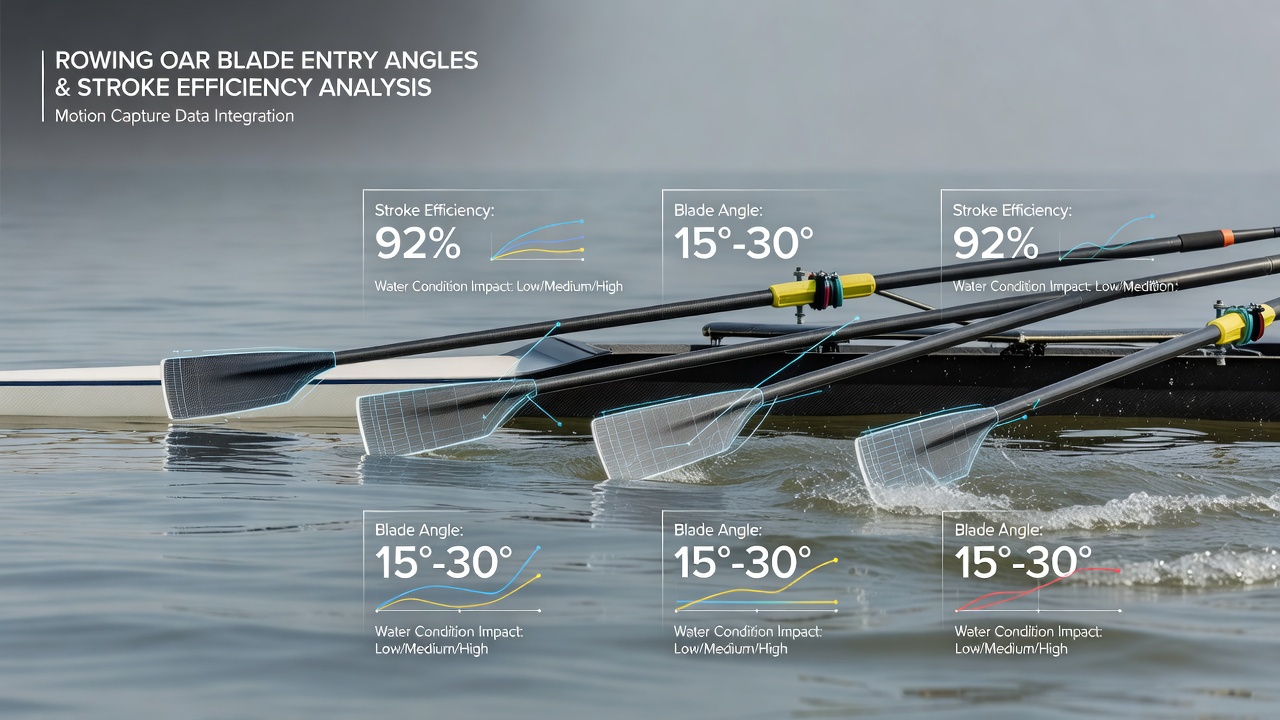
High-speed cameras and reflective markers placed along oar shafts allow researchers to track entry angles at the moment the blade contacts the water surface. In laboratory tanks that simulate wave heights up to 30 centimeters, entry angles typically steepen by 8 to 12 degrees compared with still-water baselines. Field studies conducted on open water have shown similar patterns, though wind-driven chop introduces additional variability in blade orientation during the catch phase.
Data collected through these systems indicates that rowers adjust wrist and shoulder positioning milliseconds before contact to keep the blade square. When wave frequency increases, the same athletes often delay the final rotation, resulting in slightly shallower entries that reduce the risk of catching water prematurely. These adjustments appear consistently across elite and club-level participants tracked over multiple seasons.
Stroke Efficiency Patterns in Calm Versus Rough Water
Stroke efficiency journals maintained by rowers on the Pacific Northwest coast document daily entries that pair subjective ratings of power application with objective metrics such as split times and heart-rate response. In calm conditions, entries averaging 35 degrees from horizontal correlate with lower drag coefficients measured through onboard sensors. When wind speeds exceed 15 knots, the same rowers note that angles closer to 42 degrees help maintain forward momentum through short-period waves.
Researchers at the Australian Institute of Sport have cross-referenced similar journal entries with force-plate data collected from instrumented boats. Their analysis shows that deviations beyond 5 degrees from an individual's preferred entry angle increase energy expenditure by roughly 4 percent per stroke over a 2000-meter effort. These findings align with diary notes from rowers who report higher fatigue when forced to alter technique repeatedly in variable conditions.
Regional Studies and Seasonal Observations
European rowing federations have compiled multi-year datasets from regattas held on lakes and coastal courses. Entries logged during June events frequently reference changing surface conditions caused by afternoon thermal winds. Motion capture footage from those competitions reveals that crews maintaining consistent blade angles through gust-driven chop achieve higher average boat speeds than those who overcompensate with steeper catches.
Canadian university laboratories have extended this work by examining how current flow influences entry mechanics. In river trials where flow rates reached 1.2 meters per second, rowers who adapted entry angles upstream versus downstream showed measurable differences in stroke length and recovery timing. Journals from these athletes highlight the importance of real-time visual feedback from the water surface to fine-tune blade placement.
Integration of Data Sources for Training Applications
Coaches now combine motion-capture summaries with rower journals to create individualized angle targets for different venues. Software platforms overlay recorded blade paths onto video of training sessions, allowing athletes to review how their entries shift between morning flat water and afternoon wind-affected sessions. This approach has been adopted by several national teams preparing for international competitions scheduled through 2026.
One notable development involves portable motion sensors that transmit angle data directly to coaching tablets during on-water sessions. Rowers receive immediate cues when entries fall outside their established efficiency range, prompting micro-adjustments without interrupting stroke rhythm. Journals updated after these sessions show improved consistency in split times across varying water states.
Conclusion
Combined motion capture records and rower efficiency journals provide a detailed picture of how oar blade entry angles respond to changing water conditions. The data demonstrate clear patterns of adaptation that influence propulsion and energy cost. Continued collection of synchronized technical and subjective records supports ongoing refinement of training protocols across competitive rowing programs.