Kayak Paddle Blade Torque Resistance in Whitewater Rapids Explored Through Force Gauge Data and Endurance Records
Sam Zimmermann · Jun 20, 2026
Kayak Paddle Blade Torque Resistance in Whitewater Rapids Explored Through Force Gauge Data and Endurance Records
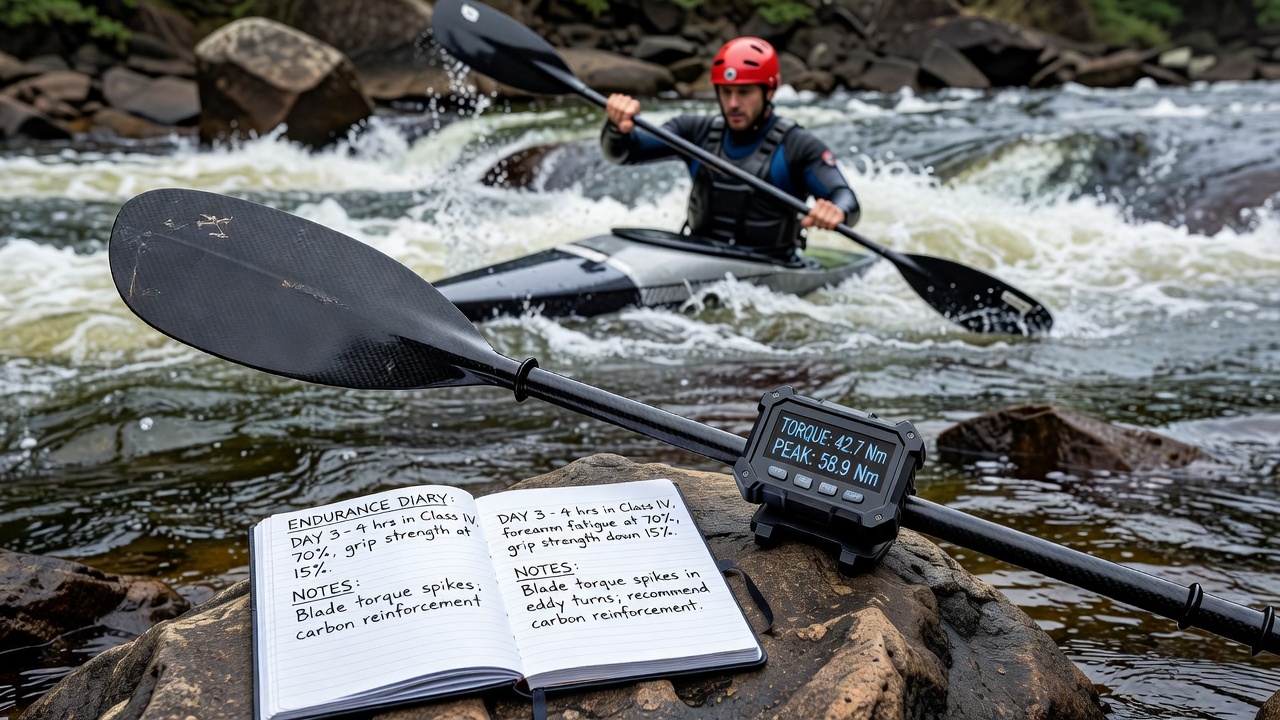
Researchers attached force gauges directly to paddle shafts in controlled whitewater environments, where they captured torque resistance values across multiple rapid classifications, and these instruments delivered precise readings that ranged from 12 Newton-meters in moderate flows to over 52 Newton-meters when blades encountered powerful eddy lines. Data collection occurred throughout spring testing sessions that extended into June 2026, when river levels peaked due to seasonal runoff, allowing teams to document how blade shapes responded to lateral forces generated by turbulent currents.Force Gauge Methodology and Torque Patterns
Teams mounted strain gauge sensors at the blade-shaft junction on various kayak paddle designs, which included both asymmetrical and symmetrical blades, while paddlers navigated Class III through Class V rapids on rivers in the Pacific Northwest and Canadian Rockies. The gauges sampled at 500 hertz intervals, and recordings showed that torque spikes often aligned with sudden changes in water pressure rather than steady current flow, whereas peak resistance moments lasted between 0.8 and 2.3 seconds per event.
Studies coordinated by the Canadian Sport Institute Pacific revealed consistent patterns across 47 separate runs, where blades with wider surface areas generated higher average torque readings of 34 Newton-meters compared to narrower designs that averaged 27 Newton-meters under identical conditions. Observers noted that carbon fiber shafts flexed minimally during these events, which allowed the sensors to isolate blade-specific resistance without significant interference from shaft torsion.
Paddler Endurance Diaries and Real-World Application
Paddlers maintained detailed daily logs that tracked perceived fatigue levels, stroke efficiency ratings, and recovery times after multi-hour whitewater sessions, and these diaries complemented the quantitative force data by revealing how sustained torque exposure affected muscle endurance over successive days. One group of six experienced kayakers recorded entries during a June 2026 expedition on the Chilcotin River, where they noted increased forearm tension after repeated encounters with torque values exceeding 40 Newton-meters, although overall stroke counts remained stable when paddlers adjusted their grip positions slightly forward on the shaft.
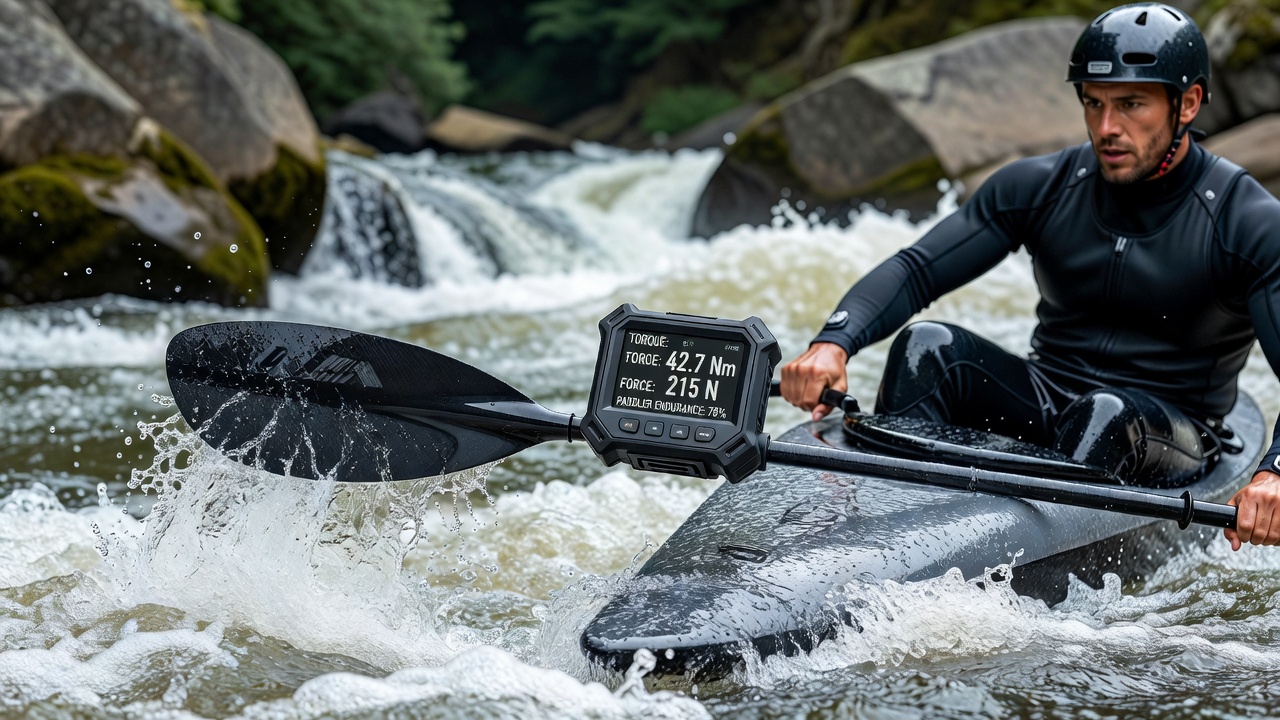
Entries from these logs indicated that torque resistance correlated with higher energy expenditure during upstream ferries and boof maneuvers, yet participants who rotated paddle blades every 20 minutes reported lower cumulative fatigue scores compared to those who maintained fixed orientations. Data from these diaries aligned closely with gauge outputs, which demonstrated that cumulative torque exposure above 35 Newton-meters for periods longer than 45 minutes often preceded noticeable declines in stroke power output.
Comparative Analysis Across Paddle Designs
Tests compared fiberglass, carbon composite, and hybrid blade constructions under matched rapid conditions, and results showed that hybrid models maintained more consistent torque resistance profiles across temperature variations in water ranging from 8 to 14 degrees Celsius. Force gauge outputs further indicated that blade edge bevel angles influenced lateral torque development, with steeper bevels producing up to 18 percent higher readings during cross-current transitions than shallower profiles.
Researchers cross-referenced these findings with biomechanical studies published through the Australian Institute of Sport, which examined similar torque dynamics in ocean kayak environments, whereas the whitewater-specific data highlighted greater variability due to unpredictable hydraulic features. Endurance diary entries reinforced these observations by documenting that paddlers using lower-torque blades completed extended runs with fewer reported instances of grip slippage or wrist strain.
Integration of Sensor Data With Field Observations
Analysis combined real-time force readings with video documentation of blade angles at entry and exit points, which allowed teams to map torque events to specific water features such as pillow formations and lateral waves. This integrated approach revealed that torque resistance increased most sharply when blades entered aerated water pockets, a condition frequently encountered in June 2026 during high-volume releases from upstream reservoirs.
Additional comparisons drew from reports issued by the European Commission sport science division, where similar sensor protocols applied to flatwater training produced lower baseline torque values but similar fatigue progression curves when session durations extended beyond two hours. Whitewater paddlers incorporated these cross-context insights into their training adjustments, modifying stroke timing to reduce prolonged exposure to peak resistance zones.
Conclusion
Force gauge measurements and corresponding paddler endurance diaries together provide detailed records of how kayak paddle blades interact with whitewater torque forces, and these combined datasets support ongoing refinements in equipment selection and technique development. Continued monitoring through 2026 and beyond offers opportunities to track seasonal variations in river dynamics alongside athlete performance metrics.