Inside the Numbers: Measuring Dumbbell Eccentric Control in Drop Sets Through Athlete Diaries and Force Plate Analysis
Sam Zimmermann · May 18, 2026
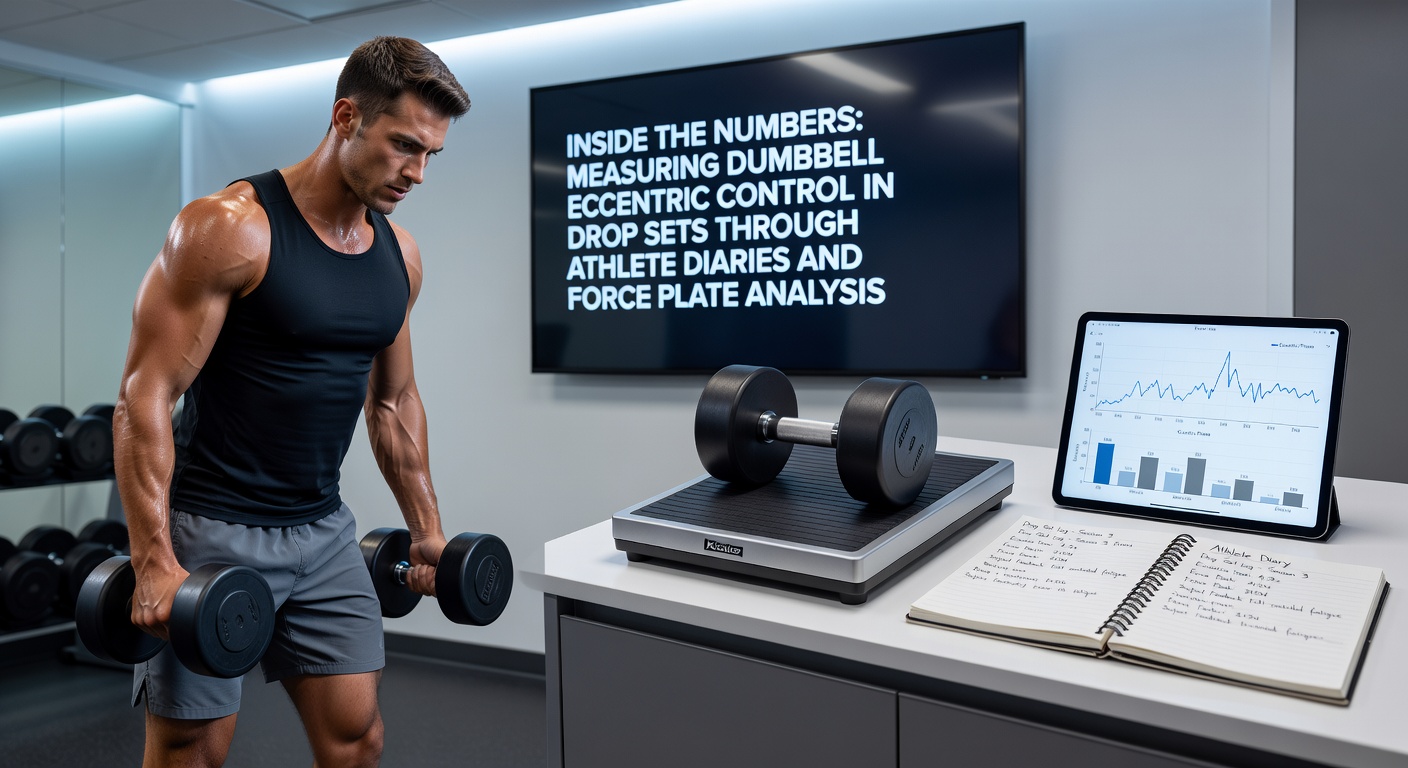
Inside the Numbers: Measuring Dumbbell Eccentric Control in Drop Sets Through Athlete Diaries and Force Plate Analysis
Drop sets have long served as a training staple for building muscular endurance and hypertrophy, yet precise measurement of eccentric control during these protocols remains a developing area of study. Researchers combine self-reported athlete diaries with force plate technology to capture both subjective experiences and objective biomechanical data, creating a fuller picture of how lifters manage the lowering phase under fatigue. This dual approach reveals patterns in tempo consistency, force distribution, and recovery indicators that single-method studies often miss.
Defining Eccentric Control in Drop Set Contexts
Eccentric control refers to the deliberate management of muscle lengthening under load, a phase that generates significant force but also heightens injury risk when technique breaks down. In drop sets athletes reduce weight after reaching failure on an initial set, then continue with minimal rest, which amplifies cumulative fatigue. Studies show that eccentric portions account for up to 60 percent of total work in such sequences, making controlled lowering essential for both performance and safety. Data from multiple labs indicate that lifters who maintain steady eccentric tempos experience lower peak joint stresses compared to those who accelerate through the descent.
Athlete Diaries Capture Subjective Patterns
Training logs maintained by athletes provide granular details on perceived exertion, tempo adherence, and session outcomes that lab equipment alone cannot record. Participants typically note start and end times for each drop, rate their control on standardized scales, and flag any discomfort or form deviations. One researcher who reviewed hundreds of entries from collegiate strength programs found consistent correlations between reported fatigue spikes and subsequent drops in eccentric duration. These diaries also document external factors such as sleep quality and nutrition timing, variables that influence neuromuscular readiness during high-repetition protocols. Observers note that athletes who log data daily tend to self-correct technique faster than those relying solely on coach feedback.
Force Plate Technology Delivers Quantitative Metrics
Force plates measure ground reaction forces and center-of-pressure shifts in real time, offering precise quantification of eccentric loading that diaries cannot supply. When athletes perform dumbbell drop sets while standing on these platforms, researchers track parameters including peak force, rate of force development, and asymmetry between limbs. Equipment sampling at 1000 hertz captures subtle changes in deceleration that occur as fatigue accumulates across successive drops. Data collected during controlled trials show that eccentric force peaks often rise 15 to 25 percent above concentric peaks in later sets, highlighting the mechanical demands placed on stabilizing muscles.
Integrating Diary Entries with Force Plate Readings
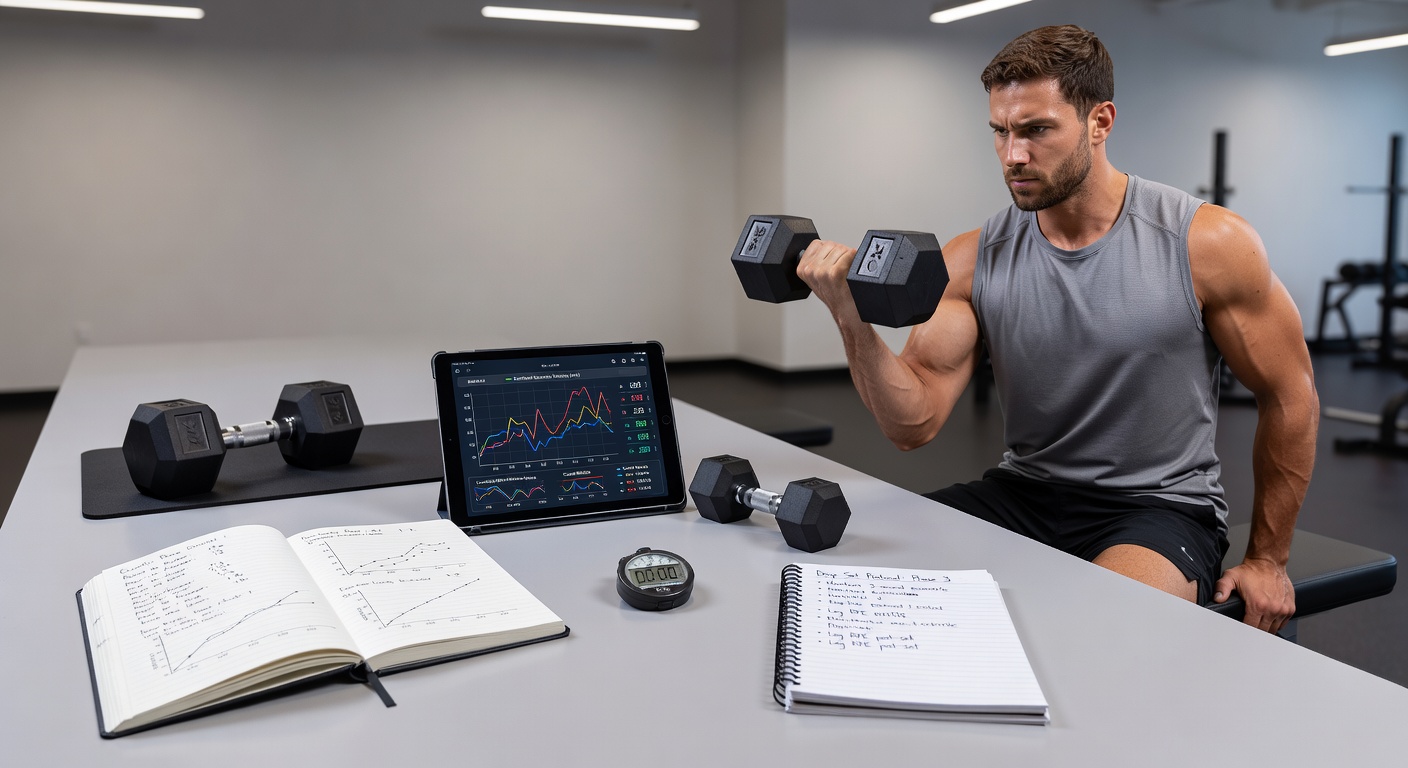
Combining qualitative logs with quantitative sensor data allows analysts to cross-validate findings and identify discrepancies between perceived and actual control. For instance, an athlete might report steady tempos while force traces reveal increasing variability in descent velocity after the third drop. Research teams at institutions across North America and Europe have synchronized diary timestamps with plate outputs to map these mismatches, revealing that subjective ratings of control often lag behind measurable breakdowns by one or two repetitions. This integration proves especially useful during field studies where portable force plates travel to training facilities and athletes continue normal routines. Results from such combined datasets indicate that athletes who adjust rest intervals based on diary feedback achieve more consistent eccentric force profiles over multi-week training blocks.
Current Data Collection Efforts in 2026
Protocols active in May 2026 continue to expand sample sizes by recruiting lifters from varied training backgrounds, including powerlifters, bodybuilders, and recreational gym users. Teams coordinate diary submissions through secure digital platforms while force plate sessions occur at scheduled intervals, creating longitudinal records that span several mesocycles. Preliminary figures reveal that participants who maintain eccentric durations above two seconds per repetition demonstrate reduced asymmetry scores on the plates, a pattern consistent across multiple geographic cohorts. Collaboration with organizations such as the Australian Sports Commission has introduced standardized logging templates that improve inter-rater reliability for diary analysis. Meanwhile, partnerships with Canadian university labs add comparative datasets from athletes training at higher altitudes where recovery kinetics differ.
Practical Applications for Coaches and Athletes
Coaches use integrated findings to design individualized drop set prescriptions that respect measured eccentric limits rather than arbitrary repetition targets. For example, force plate data may prompt a reduction in total drops once asymmetry exceeds five percent, while diary notes on perceived soreness guide subsequent session spacing. Training centers that adopt this monitoring approach report fewer acute overload complaints, though long-term outcome studies remain underway. Researchers at the National Institutes of Health continue to examine how these metrics translate across age groups and training histories, adding further layers to the existing evidence base.
Conclusion
The combination of athlete diaries and force plate analysis supplies complementary perspectives on eccentric control during dumbbell drop sets, yielding actionable metrics for technique refinement and load management. Ongoing work through spring 2026 and beyond continues to refine these methods, expanding the dataset available to strength professionals worldwide. As more programs adopt synchronized tracking, the resulting body of evidence supports more precise programming that aligns subjective experience with biomechanical reality.