Impact Absorption in Boxing Gloves During Sparring Rounds: Accelerometer Data and Fighter Recovery Insights
Iris Lange · Jun 8, 2026
Impact Absorption in Boxing Gloves During Sparring Rounds: Accelerometer Data and Fighter Recovery Insights
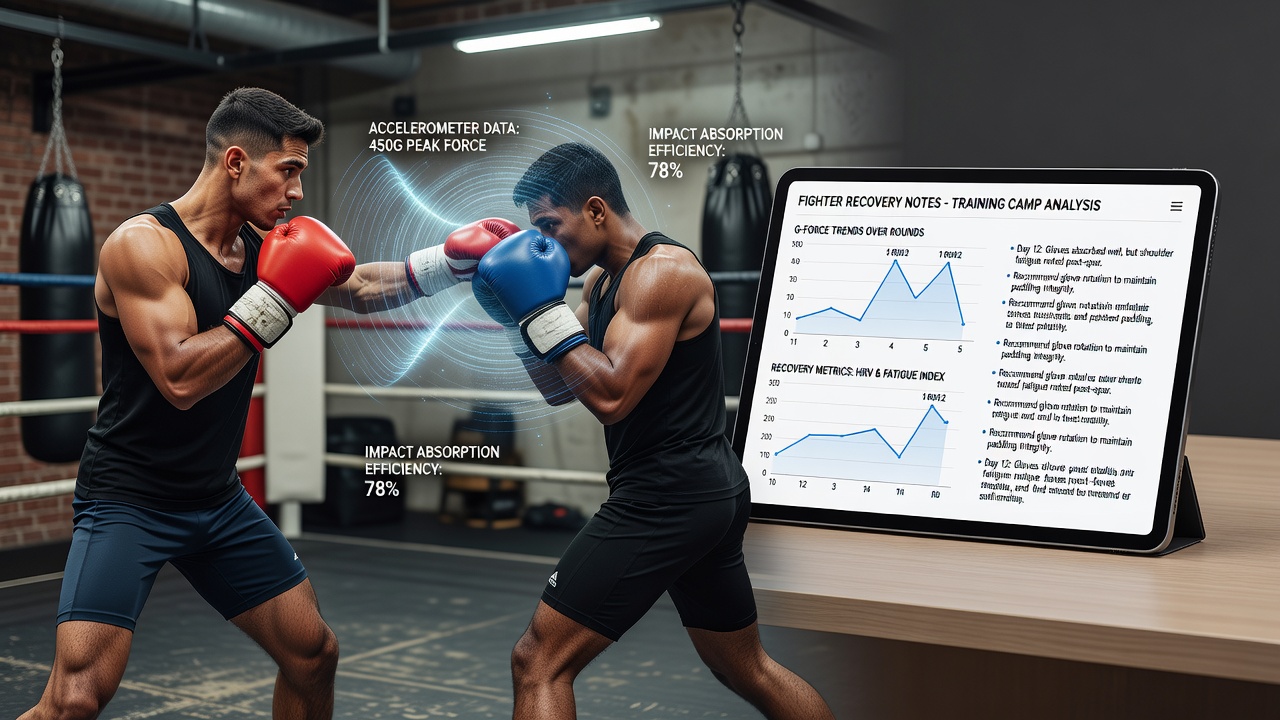
Boxing gloves play a central role in managing force transfer during sparring rounds, and researchers have turned to accelerometer sensors embedded in glove padding to track peak impact forces across multiple training camps. Data collected from these devices shows consistent patterns in how different glove constructions absorb and dissipate energy when fighters exchange punches at varying intensities, with measurements taken throughout sessions that last three to five rounds. Observers note that these readings help distinguish between gloves that reduce transmitted force effectively and those that allow higher acceleration spikes to reach the hand and wrist structures.
Accelerometer Methodology in Sparring Environments
Training facilities have integrated triaxial accelerometers into the knuckle padding of standard 16-ounce gloves, capturing data at sampling rates of 1000 Hz during live sparring. Fighters wear the instrumented gloves while partners use standard protective equipment, and the sensors record linear acceleration along multiple axes each time a punch lands. Studies conducted through 2025 and into June 2026 at camps in North America and Europe indicate that peak accelerations often range between 40g and 120g depending on punch type, with hooks and uppercuts producing the highest values because of their rotational components. Researchers calibrate each sensor against known impact rigs before sessions begin, which allows direct comparison of force curves across different glove brands and foam densities.
One analysis from a multi-week camp tracked eight amateur fighters across 120 total rounds, revealing that gloves with multilayer foam cores reduced peak acceleration by 18 to 25 percent compared with single-density models during straight punches. The data also captured how glove weight distribution affects follow-through acceleration, since heavier gloves tend to slow hand speed yet spread force over a longer contact duration. Technicians download raw files after each session and apply filtering algorithms to isolate true impact events from movement artifacts, producing time-series graphs that map force onset, peak, and decay within milliseconds.
Recovery Notes Paired with Sensor Readings
Fighters maintain daily recovery logs that document hand soreness, swelling, and sleep quality after sparring days, and these notes align closely with the accelerometer outputs collected the same week. Entries from one Australian training camp showed that sessions registering average peaks above 90g correlated with increased reports of knuckle tenderness the following morning, while lower-force days produced fewer complaints. Recovery metrics include grip strength measurements taken 12 and 24 hours post-session, plus self-reported pain scales that range from zero to ten, allowing researchers to match subjective feedback against objective force data.
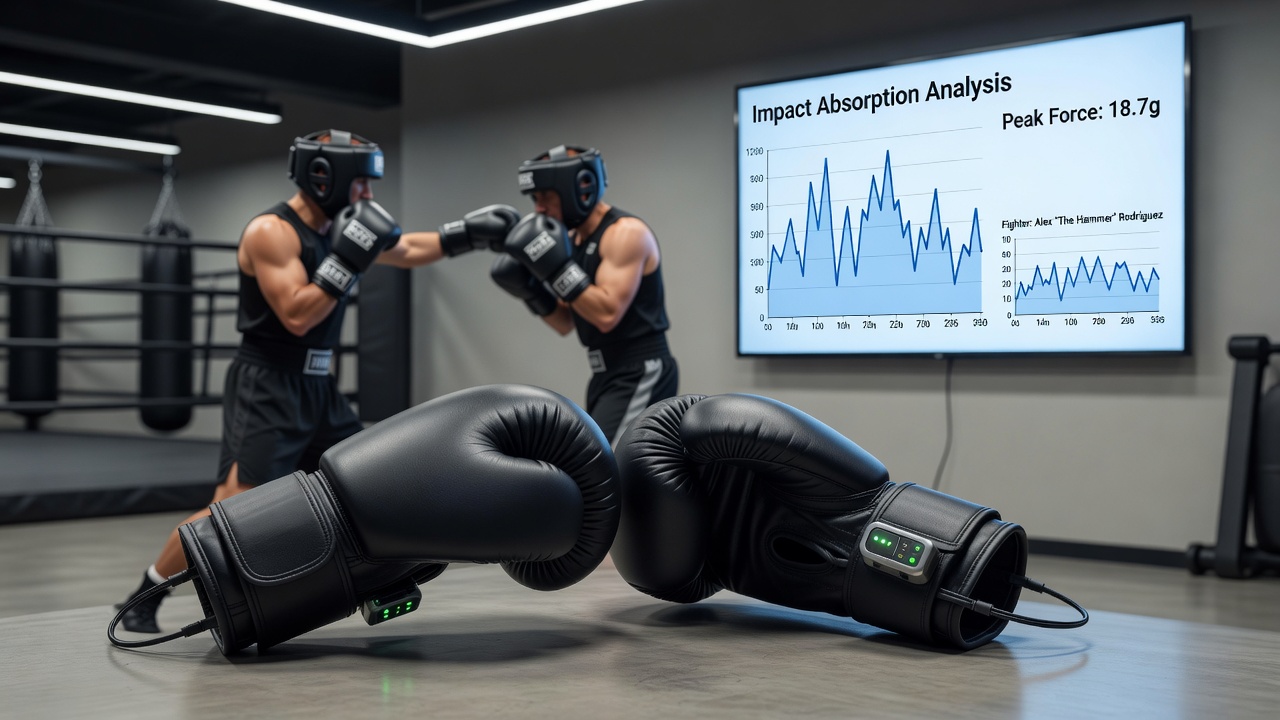
Coaches review these combined datasets to adjust round volume and glove selection, and patterns emerge when fighters who experience repeated high-acceleration impacts show slower grip-strength recovery over consecutive training days. In one documented sequence from a European camp, a switch to gloves with thicker gel inserts lowered average peak forces by 22 percent and coincided with improved sleep scores and reduced next-day swelling measurements. The logs also record hydration levels and nutrition timing, variables that researchers control for when correlating impact data with physiological recovery markers such as inflammation indicators measured through blood samples at select intervals.
Comparative Findings Across Glove Models
Side-by-side testing of popular glove models reveals measurable differences in energy dissipation that accelerometer traces make visible. Gloves featuring latex foam layers consistently record shorter contact times and lower rebound accelerations than those using traditional horsehair padding, while newer hybrid constructions fall between these extremes. Data gathered across three separate camps in 2025 demonstrated that fighters using the hybrid models maintained consistent punch output through later rounds, whereas single-layer designs showed gradual increases in transmitted force as padding compressed. Observers track these shifts by overlaying round-by-round acceleration histograms, which highlight how cumulative fatigue in the glove materials alters performance mid-session.
Recovery journals from the same participants indicate that lower peak forces often translate into fewer interruptions in training schedules, since reduced hand trauma allows athletes to maintain sparring frequency without extended rest periods. Researchers cross-reference these outcomes with video footage synchronized to the sensor timestamps, confirming that technique variations such as fist alignment also influence the recorded values independent of glove construction. The combined approach of quantitative sensor data and qualitative recovery notes provides a fuller picture than either method alone, and several camps now incorporate both elements into weekly performance reviews.
Implications for Training Camp Protocols
Coaches use the accelerometer-derived thresholds to set upper limits on acceptable impact forces during sparring, adjusting intensity when readings approach predetermined safety markers established from prior camp data. Fighter recovery notes serve as an early-warning system, flagging days when even moderate acceleration values produce disproportionate soreness that might indicate underlying technique issues or equipment wear. In June 2026 several programs began piloting real-time feedback systems that alert corner staff when cumulative force exposure exceeds session targets, allowing immediate glove changes or rest intervals before recovery becomes compromised.
Longitudinal tracking across multiple camps shows that athletes who maintain lower average impact profiles sustain higher training volumes over a 12-week period without measurable declines in hand function. These patterns hold across weight classes and experience levels, suggesting the monitoring approach scales effectively. Data repositories maintained by sports science groups continue to expand, incorporating new glove models and sensor refinements that improve measurement precision each season.
Conclusion
Accelerometer measurements paired with fighter recovery documentation supply objective evidence of how boxing glove designs influence force transmission during sparring. The integration of these data streams supports evidence-based decisions on equipment selection and session planning across training environments. Continued collection through 2026 and beyond will refine understanding of the relationship between impact profiles and long-term hand health in combat sports athletes.