Grommet Friction Patterns and Tension Shifts in Extended Clay Court Baseline Play
Clara Neumann · Jul 16, 2026
Grommet Friction Patterns and Tension Shifts in Extended Clay Court Baseline Play
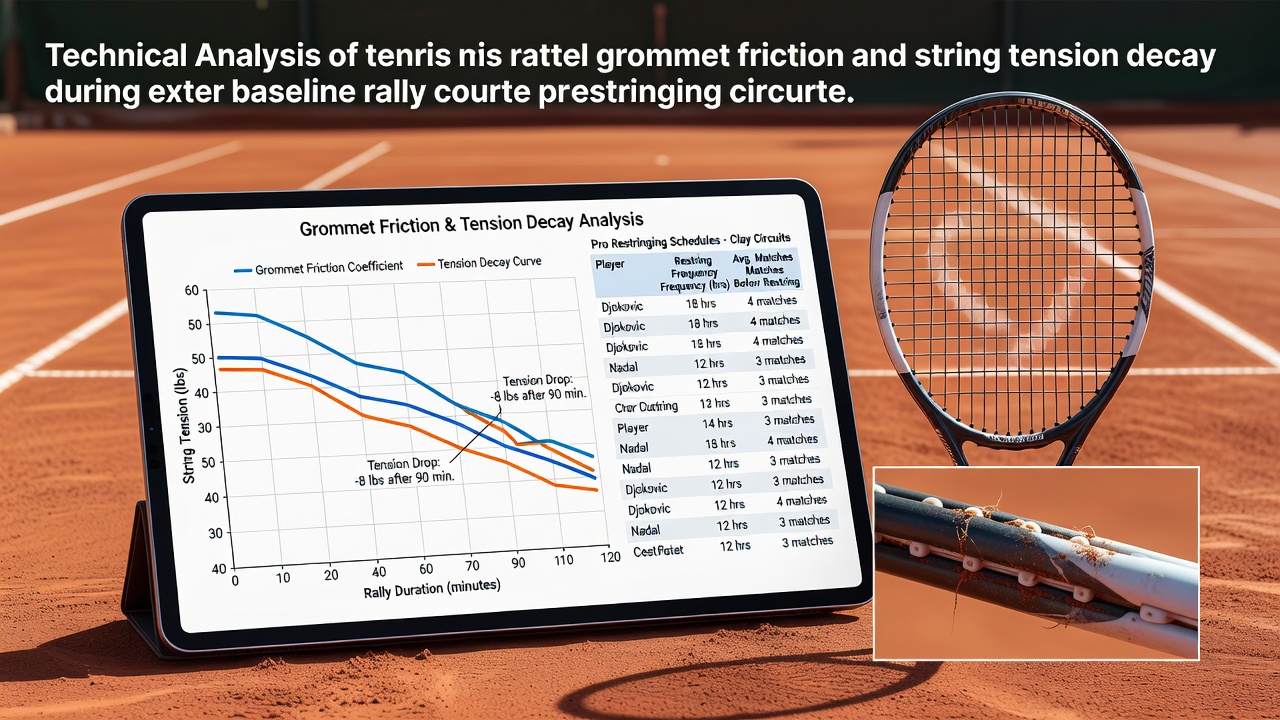
Clay court circuits place unique demands on racket setups, where extended baseline rallies generate repeated string movement through grommets and create measurable friction that accelerates tension decay. Professional players on these surfaces often adjust restringing intervals based on data from tension monitors, while researchers track how grommet materials interact with polyester strings during long exchanges that can exceed thirty shots per point.
Studies from European sports laboratories have recorded average tension losses of 8 to 12 percent after two hours of continuous clay court hitting, with friction at the grommet edges contributing significantly to the drop. Data collected during the 2026 clay season shows that players competing through June and into July events typically restring every three to four matches when relying on hybrid string setups, whereas full polyester configurations require more frequent changes to maintain consistent launch angles.
Mechanics of Grommet Friction During Prolonged Rallies
Friction develops as strings slide back and forth through grommet holes with each impact and recovery phase, and the clay particles that infiltrate these openings increase resistance further. Observers note that this sliding action creates micro-abrasions on both string coatings and grommet interiors, which compounds over multiple points and leads to higher rates of tension loss compared with faster hard court surfaces. Australian Institute of Sport measurements paired with player logs indicate that baseline rallies lasting fifteen seconds or more produce the steepest decay curves, especially when topspin levels exceed 3000 rpm.
Equipment technicians working with ATP and WTA squads monitor these effects by logging pre- and post-match tension readings, then cross-reference the numbers against video analysis of rally lengths. Those records reveal that grommet designs with smoother inner channels reduce friction coefficients by up to 15 percent, allowing strings to maintain tension longer during the slow, grinding points common on clay.
Matching Tension Data With Professional Restringing Schedules
Restringing schedules on the clay circuit align closely with tension decay readings collected from onboard sensors. Players who compete in best-of-three or best-of-five formats often request fresh strings after every second or third match when data shows cumulative losses approaching 15 percent, a threshold that alters spin potential and control according to force-plate studies conducted at Canadian university labs. July 2026 circuits, including lead-up events before major clay tournaments, demonstrate this pattern clearly as humidity and surface moisture add another variable that speeds grommet wear.
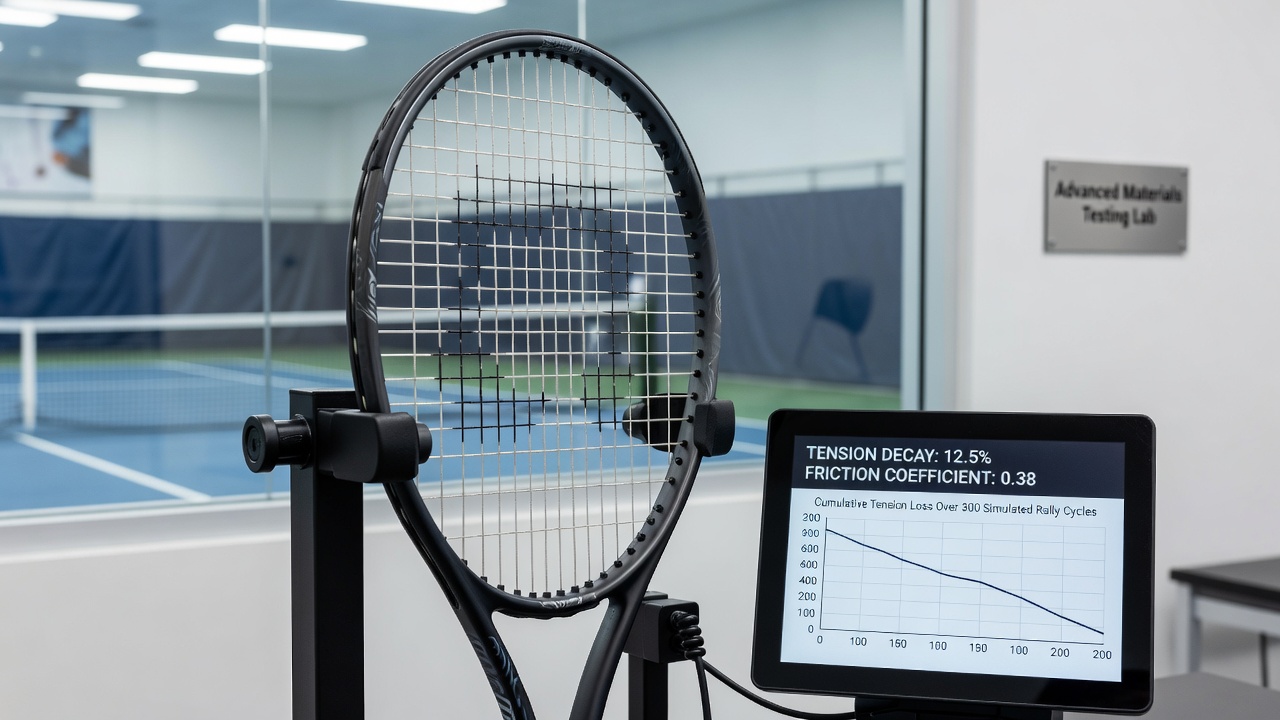
Technicians track individual racket histories across tournaments, noting that certain grommet materials hold up better under repeated friction cycles while others develop sharp edges that accelerate string notching. These findings help teams decide between full restring jobs and selective string replacements, which saves time without sacrificing performance consistency during long matches.
Regional Variations and Equipment Adjustments
Clay court events across South America, Europe, and North America produce slightly different friction profiles because of variations in court composition and ball speed. Research groups in Brazil and Spain have documented how red clay dust penetrates grommet openings more aggressively than blue clay surfaces, prompting players to adopt protective grommet tape or frequent cleaning routines. Tension logs from these regions show that decay rates can differ by as much as 4 percent between venues, influencing how often support staff schedule restring sessions during packed July calendars.
Players adapt by selecting grommet sets with reinforced edges or by rotating multiple rackets throughout a match to distribute wear evenly. Data from these rotations demonstrates that tension remains within acceptable ranges for longer periods when no single frame endures continuous friction stress.
Conclusion
Clay court baseline rallies create predictable yet variable friction effects at the grommet level that directly influence tension retention and restringing frequency. Tension decay readings collected across professional circuits supply objective benchmarks that technicians and players use to time maintenance and maintain equipment performance through extended schedules. Continued monitoring during 2026 events will refine these correlations further as new grommet compounds and string coatings enter circulation.