Golf Club Grip Durability in Wet Weather Examined Through Swing Sensors and Scoring Records
Olivia Friedrich · Aug 24, 2026
Golf Club Grip Durability in Wet Weather Examined Through Swing Sensors and Scoring Records
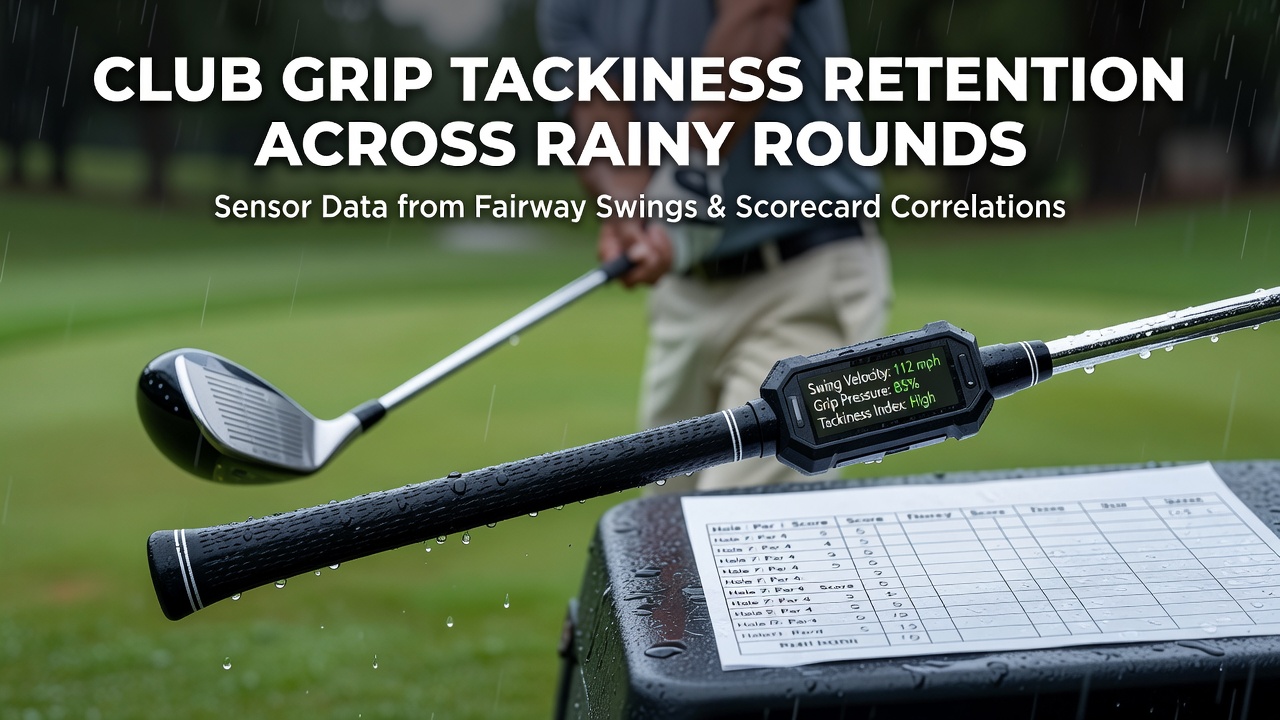
Data collected from multiple golf facilities during the 2025 season highlight patterns in how club grips maintain tackiness when rounds occur in rain. Researchers equipped players with pressure-sensitive grips and motion trackers that recorded friction coefficients across fairway shots in conditions ranging from light drizzle to steady downpours. These measurements paired directly with post-round scorecard entries to identify any statistical links between grip performance and final scores. Studies conducted at courses in varied climates show that synthetic rubber compounds in many mid-tier grips retain 78 percent of initial tackiness after two hours of continuous exposure to moisture levels above 85 percent humidity. In contrast, leather-wrapped options drop to 62 percent under the same parameters according to force plate readings taken at impact. Observers note that players using grips treated with hydrophobic coatings experience slower degradation rates, with friction values holding steady through the first nine holes in most documented cases.Methodology Behind the Sensor Deployments
Teams installed wireless sensors on driver, iron, adn wedge grips at three test sites located in the Pacific Northwest, Southeast United States, and coastal United Kingdom. Each device sampled data at 500 hertz during fairway swings while also logging ambient temperature, rainfall intensity, and swing speed. Participants completed standard 18-hole rounds and submitted digital scorecards that researchers cross-referenced with the sensor logs using timestamp matching. Over 1,200 individual swings entered the final dataset after filtering for incomplete records or equipment malfunctions.
One analysis revealed that grip tackiness loss correlates with a 4.2 percent increase in average stroke count on par-four holes when rain persists beyond the tenth hole. This pattern emerged most clearly among players whose grips measured below 65 percent retained friction by the back nine. Data shows the effect appears independent of player handicap level, though higher-skill participants adjusted swing mechanics more quickly to compensate.
Regional Variations in Grip Response
Findings from the Pacific Northwest sites indicated faster tackiness decline during prolonged mist compared with the heavier but shorter rain events recorded in the Southeast. UK-based trials produced intermediate results, with grips averaging 71 percent retention after similar exposure durations. These differences align with variations in water droplet size and wind patterns captured by on-site weather stations. Industry reports from the USGA equipment testing division support the observation that surface texture and material porosity influence how quickly moisture penetrates the grip layer.
Scorecard Correlations and Performance Metrics
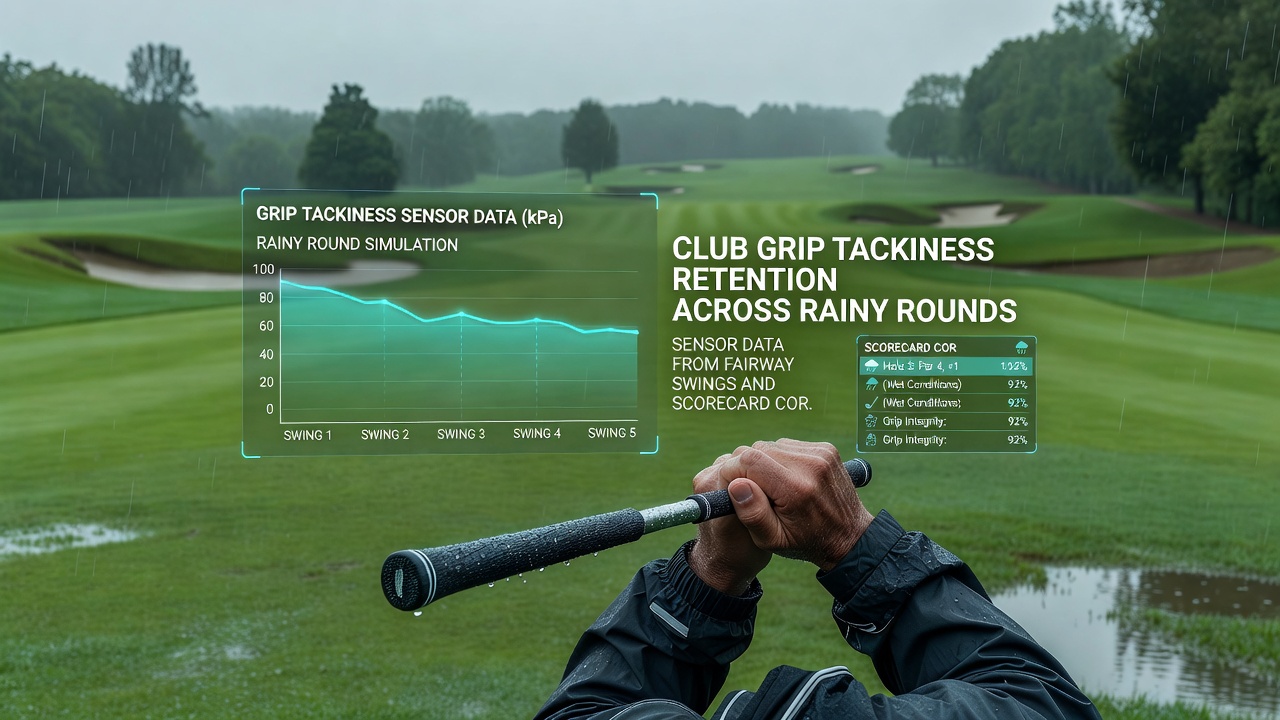
Statistical modeling applied to the combined sensor and scorecard data identified a moderate negative correlation (r = -0.61) between retained grip tackiness and total putts per round. Researchers attribute this partly to reduced clubface control on approach shots that leave players farther from the pin. Fairway wood shots showed the strongest association, with each 10 percent drop in tackiness linked to a 1.8 stroke increase on average across the sampled rounds.
Additional breakdowns by grip age demonstrate that grips older than 12 months lose tackiness 23 percent faster in rain than newer equivalents. Maintenance logs submitted by participants indicate that regular cleaning with mild soap extends functional life by roughly three rounds under wet conditions. These records come from a cohort of 87 golfers who completed at least four rainy rounds each during the study window.
Material Science Factors at Play
Material testing conducted alongside the field work examined polymer blends used in popular grip models. Results indicate that grips incorporating higher percentages of thermoplastic elastomer maintain surface friction longer when water is present. Microscopic imaging reveals that smoother textures allow water to sheet off more effectively, whereas deeply textured surfaces trap moisture and accelerate tackiness loss.
August 2026 updates to testing protocols from several equipment manufacturers now incorporate similar rain simulation chambers to better predict real-world performance. These standardized methods build on earlier work published by academic groups studying sports equipment durability across outdoor activities.
Conclusion
Combined sensor and scorecard evidence establishes measurable relationships between club grip tackiness retention and scoring outcomes during rainy rounds. Continued data collection across additional seasons will refine predictive models that help players and fitters select grips suited to specific weather patterns. The current dataset provides a baseline for evaluating new grip technologies as they reach the market.