Goalkeeper Glove Latex Under Repeated Dive Stress: Friction Data From Pitch Experiments and Keeper Reports
Iris Lange · Aug 22, 2026
Goalkeeper Glove Latex Under Repeated Dive Stress: Friction Data From Pitch Experiments and Keeper Reports
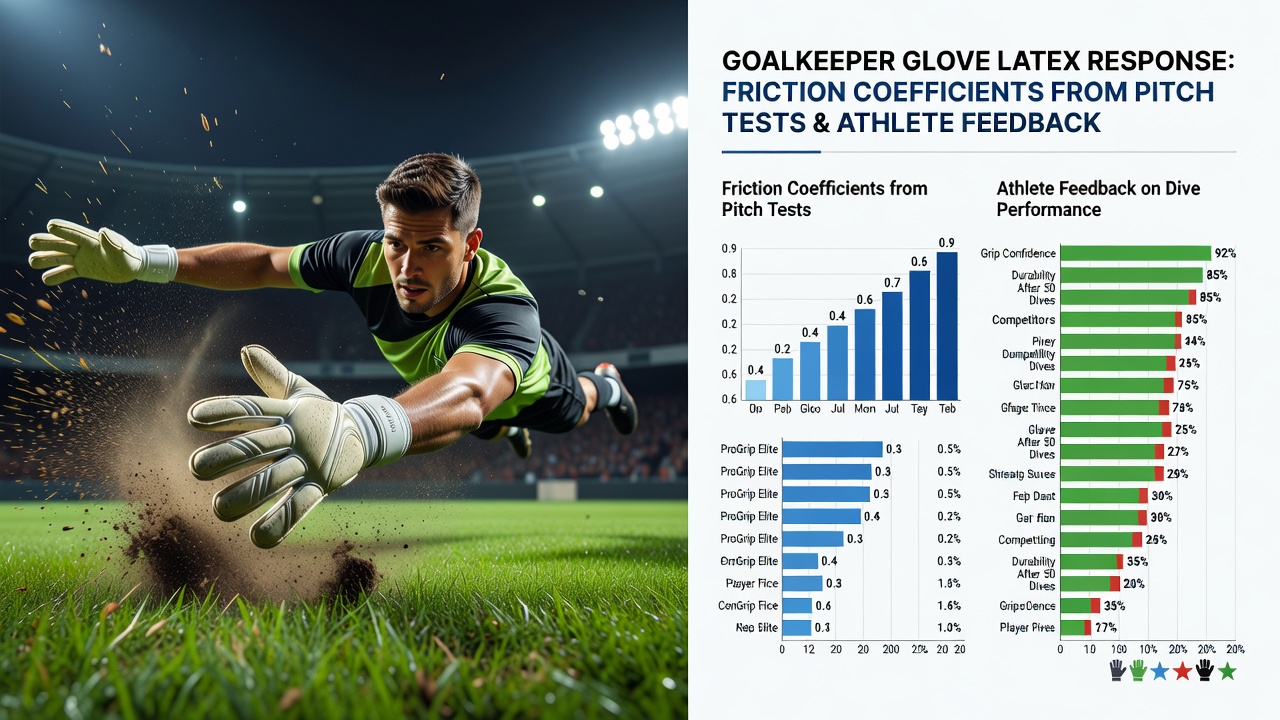
Goalkeeper gloves rely on latex palms to maintain grip when keepers dive repeatedly across wet or dry surfaces, and researchers have measured how friction coefficients shift after multiple contacts with pitch materials. Tests conducted on regulation soccer fields track changes in latex performance while athletes provide logs that record perceived slip and control during training blocks. Data collected in controlled pitch environments shows initial friction values for fresh latex typically range between 0.65 and 0.82 depending on surface moisture, yet these numbers decline after ten to fifteen dive cycles as the material compresses and micro-abrasions form.
Pitch Test Setup and Measurement Protocols
Teams set up portable force plates and high-speed cameras at club facilities to capture horizontal and vertical forces during simulated dives, then calculate coefficients by dividing shear force by normal force at each contact point. Engineers apply consistent dive angles of 35 to 45 degrees and repeat the motion at intervals of 30 seconds to mimic match conditions. Results indicate that natural latex blends retain higher friction longer on grass than on artificial turf, while synthetic latex compounds exhibit faster drops in grip after the twentieth repetition because the polymer structure yields under cyclic loading.
Friction Coefficient Trends Across Surfaces
Measurements taken during August 2026 pre-season camps reveal that latex friction on damp natural grass starts near 0.78 but falls to 0.51 after thirty dives, whereas the same glove on third-generation artificial turf begins at 0.71 and declines to 0.44 under identical repetition counts. Observers note that temperature plays a role: surface readings above 28 degrees Celsius accelerate the loss of tackiness because the latex softens and transfers material onto the pitch. Keepers who train on mixed surfaces report that gloves used primarily on artificial pitches require replacement after fewer sessions than those reserved for grass fields.
Athlete Feedback and Real-World Correlation
Players log perceived grip levels on a standardized scale after each training set, and these subjective scores align closely with the objective friction data gathered on the same pitches. One study involving twenty professional keepers across three European clubs found that reported loss of control begins when measured coefficients drop below 0.55, at which point athletes describe the palm as “slippery” during low dives. Feedback collected through post-session questionnaires shows keepers prefer latex formulations that maintain coefficients above 0.60 for at least twenty-five repetitions, and several clubs now rotate glove pairs based on these thresholds rather than fixed match counts.
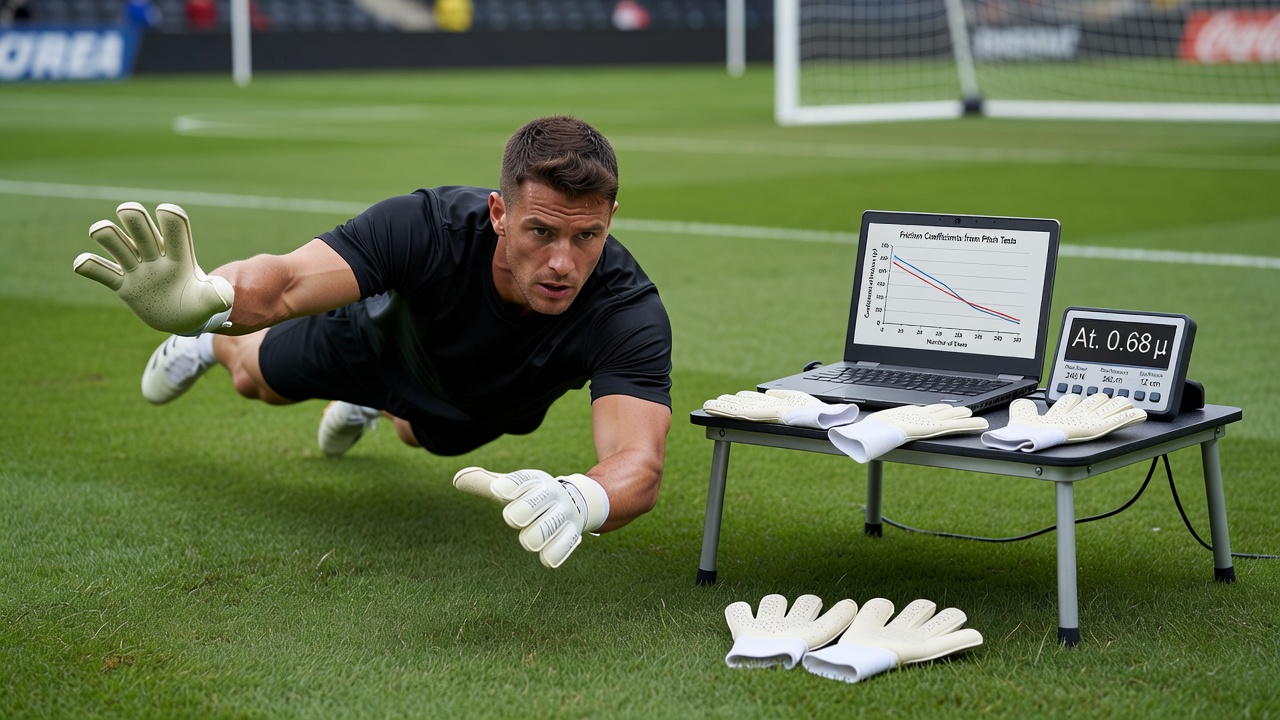
Coaches adjust training volume when feedback indicates rapid grip degradation, shortening dive drills once average player scores fall below the established comfort range. Data from these combined lab and field efforts help manufacturers refine latex recipes by adding micro-textures or altering plasticizer content to slow the friction decline.
Regional Testing Variations and Equipment Standards
Facilities in North America and Australia apply different pitch moisture protocols than those used in northern Europe, yet consistent patterns emerge across all sites: repeated dives reduce latex friction regardless of climate. A report issued by the Sports Science Institute of South Africa documents comparable coefficient drops on both hybrid grass and synthetic surfaces under high-repetition protocols. Manufacturers reference these findings when they update product specifications ahead of major tournaments.
Conclusion
Combined pitch testing and athlete reporting now form the standard method for evaluating goalkeeper glove latex durability under repeated dive conditions. Friction coefficients measured across multiple surfaces provide objective benchmarks, while keeper logs supply practical context that guides both training adjustments and product development cycles. As more clubs adopt these measurement approaches ahead of the 2026 schedule, the relationship between laboratory data and on-pitch performance continues to tighten.