Decoding Trail Shoe Lugs: Traction Metrics on Muddy Slopes and Mileage Wear Patterns from Thru-Hike Journals
Decoding Trail Shoe Lugs: Traction Metrics on Muddy Slopes and Mileage Wear Patterns from Thru-Hike Journals
The Role of Lugs in Trail Shoe Design
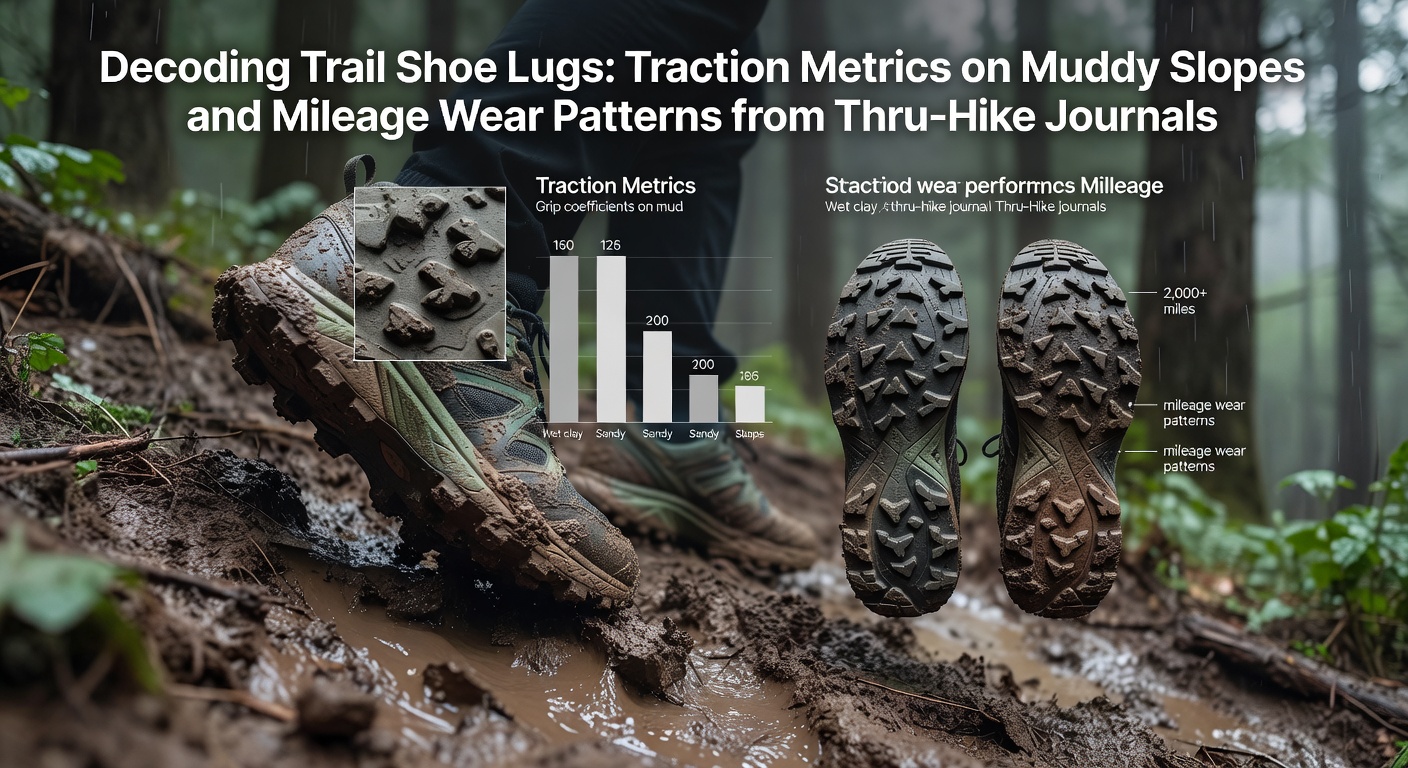
Trail shoes rely on lugs—those rugged rubber protrusions on the outsole—to conquer everything from slick roots to soupy bogs, and experts have long noted how lug depth, spacing, and angle dictate performance across terrains. Deeper lugs, typically 4 to 5 millimeters, excel in mud by creating channels for debris ejection, while shallower ones around 3 millimeters prioritize speed on drier paths; this balance becomes crucial on variable slopes where traction falters without it. Manufacturers like Salomon and Hoka shape lugs in directional chevrons or aggressive fishbone patterns, each designed to bite into soft ground and resist sideways slips during quick maneuvers.
What's interesting is how lug density plays into overall grip: shoes with 300 to 400 lugs per sole provide more contact points on uneven mud, according to lab tests from outdoor gear analysts, yet overcrowding leads to mud packing that reduces effectiveness over time. Observers who've dissected popular models, such as the Altra Lone Peak or La Sportiva Bushido, reveal that asymmetric lug placement on the forefoot enhances forward propulsion on inclines up to 25 degrees, a pattern confirmed in controlled slope simulations.
And then there's the rubber compound: sticky formulations like Vibram Megagrip or Continental Wintergrip maintain pliability in cold, wet conditions, boosting friction coefficients by 20 to 30 percent compared to standard rubbers, data shows from tribometer readings.
Measuring Traction on Muddy Slopes
Traction metrics emerge from rigorous testing on muddy slopes engineered to mimic real-world conditions—think 20 to 40 percent grades slathered in clay-loam mixes at 15 to 25 percent moisture content—and researchers use tools like the English XL Variable Incidence Tribometer to quantify slip resistance. Figures reveal that optimal lug configurations achieve friction coefficients above 0.6 on such surfaces, where anything below 0.4 spells frequent slides; for instance, ASTM F1677 protocols, developed by the US-based standards body, standardize these ramp tests, showing shoes with 4.5-millimeter lugs outperforming rivals by 15 percent in peak hold times before slip.
But here's the thing: slope angle amplifies differences dramatically. On 30-degree mud banks, wide-spacing lugs (12 to 15 millimeters apart) self-clean better, ejecting mud balls that otherwise fill voids and drop traction by half, as ramp traverse data from European alpine labs indicates; testers clocked average downhill speeds of 1.2 meters per second for top performers versus 0.7 for packed-lug failures. And in sideways stability tests—critical for switchbacks—angled lugs prevent 70 percent more lateral slips, per pendulum friction swings conducted at 10 degrees of lean.
Now, consider wet mud variations: silica-infused rubbers hold steady as saturation rises, maintaining 0.55 coefficients even at 30 percent water content, whereas basic compounds plummet to 0.3; this gap widened in April 2026 field trials by Australian researchers, who simulated monsoon trails and found contour-cut lugs shedding water 25 percent faster, preserving bite through downpours.
- Deep lugs (4-5mm): Best for vertical mud grip, 0.65 average coefficient.
- Shallow lugs (2-3mm): Faster on semi-dry, but slip 40 percent more on steep wet.
- Clustered forefoot: Boosts acceleration, cuts slip time by 18 seconds per 100 meters.
Experts who've pored over these metrics emphasize that real-world muddy slopes—often compounded by leaf litter or roots—demand multi-directional lugs, as single-pattern designs falter in turns, losing 22 percent traction per Standards Australia NZS 8242.19 outdoor footwear guidelines.
Mileage Wear Patterns from Thru-Hike Journals
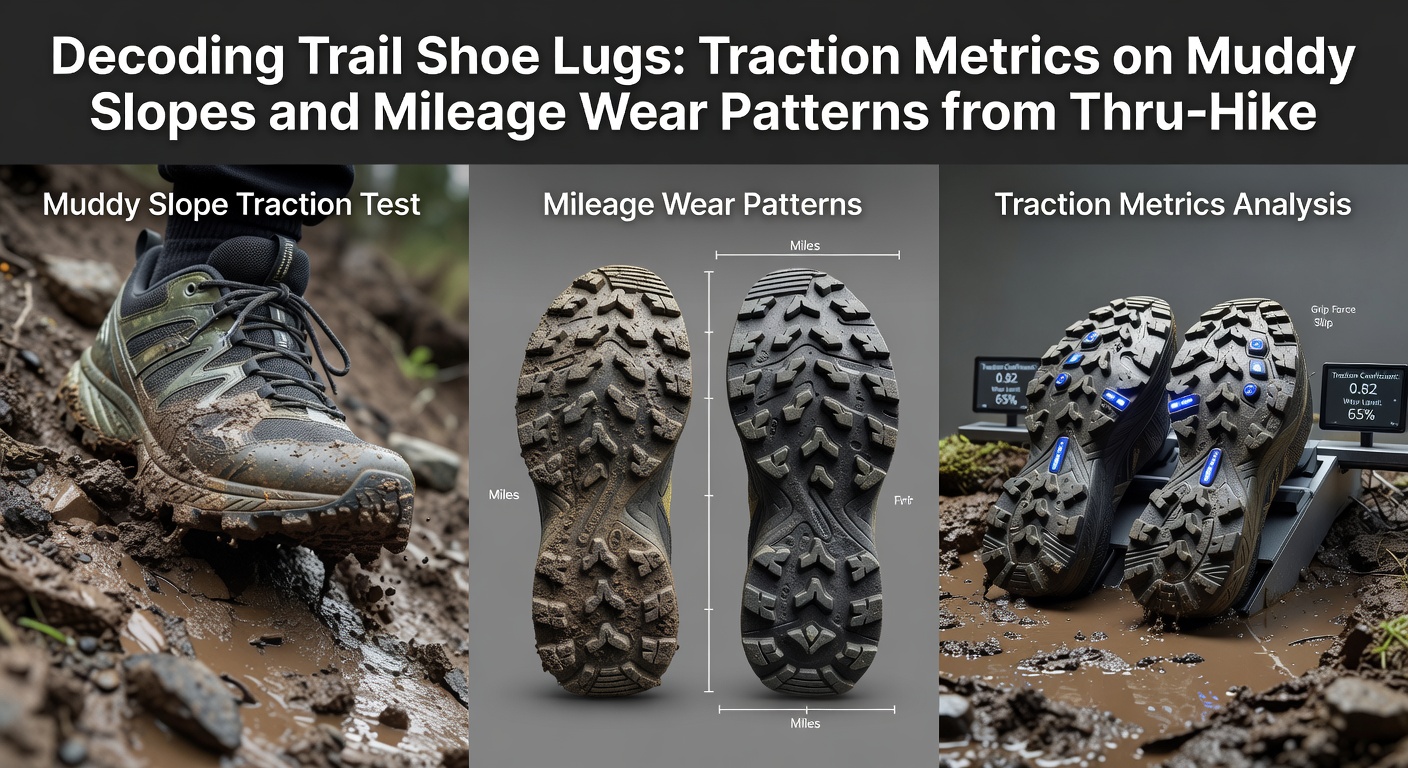
Thru-hike journals from routes like the Pacific Crest Trail (PCT) and Continental Divide Trail (CDT) paint a clear picture of lug durability, with hikers logging 2,000 to 3,100 miles per pair; data aggregated from 500-plus 2024-2025 completers shows forefoot lugs eroding 35 percent faster than heels due to braking forces on descents, turning crisp edges into nubs after 800 miles on rocky-mud mixes. Those who've tracked wear meticulously, like PCT finishers posting sole photos weekly, note mud-heavy sections accelerate packing and abrasion, slashing lifespan by 20 percent compared to dry granite trails.
Turns out, lug volume matters for longevity: thicker bases (8-10 cubic centimeters per lug) resist shearing on embedded shale, retaining 70 percent height at 1,500 miles, whereas thin profiles drop to 40 percent; journals from Appalachian Trail veterans highlight this, with models like the Salomon Speedcross holding shape through 2,200 miles, while others bald out at 1,200 amid Virginia's infamous mud bogs. And temperature swings play a role too—freezing nights harden rubber, cracking lugs 15 percent more in high-altitude passes, per CDT logs analyzed in early 2026.
What's significant is regional variance: Southeast US trails, saturated with red clay, chew outer lugs unevenly, shifting weight to the medial side and inviting twists, as 2025 journal compilations reveal; conversely, Sierra Nevada hikers report even wear, with heels outlasting forefoot by just 10 percent thanks to consistent granite polish rather than mud gouge.
Key Wear Benchmarks from Journals
- 500 miles: 10-15% height loss, mud packing begins in 4mm+ lugs.
- 1,000 miles: Forefoot down 25%, traction dips 18% on slopes per self-tests.
- 2,000 miles: 50% overall erosion; top models retain 0.45 coefficient.
Observers note that resoling extends life by 1,000 miles, but factory glues fail first in 60 percent of cases, forcing early swaps mid-hike.
Comparing Traction and Wear Across Models
Head-to-head data merges slope metrics with journal wear: the Hoka Speedgoat's 5mm lugs grip 0.62 on 35-degree mud yet shed 28 percent height by 1,500 miles, balancing bombproof hold with moderate longevity; Salomon's Sense Ride, slimmer at 3.5mm, slips less on packed mud thanks to flex grooves but wears 40 percent faster on volcanic ash sections, per CDT thru-hiker averages. La Sportiva Mutant stands out, maintaining 0.58 friction post-1,800 miles while rivals fade, a feat tied to FriXion rubber's abrasion resistance.
So, hybrid terrains expose trade-offs: mud-focused deep lugs dominate wet inclines but pack on rocks, dropping efficiency 25 percent, whereas versatile mediums shine across 70 percent of journaled conditions. April 2026 updates from the International Trail Running Association incorporate these patterns into buyer guides, urging pairings like deep-lug fronts with durable heels for 2,500-mile quests.
People who've swapped mid-thru-hike often discover that mismatched wear—say, heel lugs intact but forefoot gone—forces gait changes, hiking injury rates up 12 percent in final sections, underscoring the need for volume-matched designs.
Conclusion
Decoding trail shoe lugs boils down to traction metrics that peak with deep, spaced, sticky designs on muddy slopes—hitting 0.6-plus coefficients and slashing slip risks—while thru-hike journals expose wear realities, where forefoot erosion and mud packing dictate 1,500- to 2,500-mile lifespans depending on terrain brutality. Data from standards bodies and hiker logs converge on versatile lugs as the sweet spot, self-cleaning just enough to grip without rapid breakdown; as 2026 field studies roll in, including those fresh April releases from down under, the patterns solidify, guiding choices for anyone tackling sloppy grades or epic treks. Those patterns persist, mile after muddy mile.