Basketball Shoe Sole Traction on Hardwood Courts During Pivot Moves
Iris Lange · Jul 11, 2026
Basketball Shoe Sole Traction on Hardwood Courts During Pivot Moves
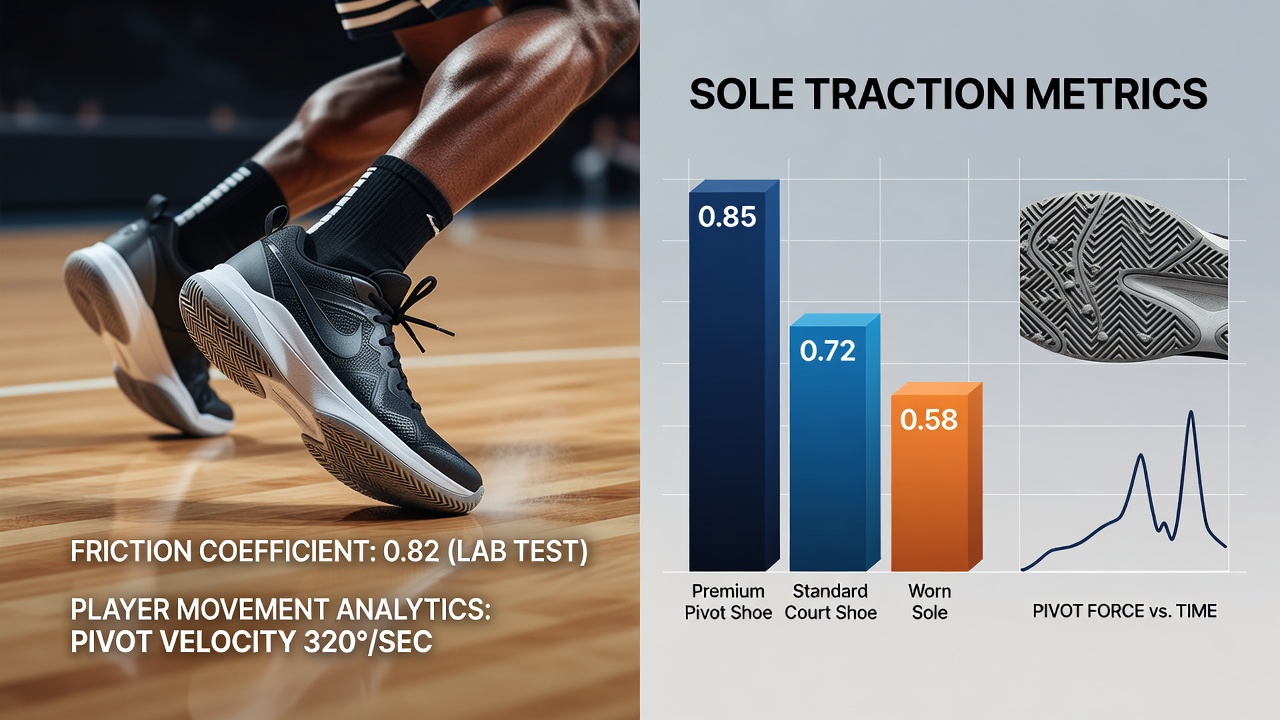
Researchers at multiple sports science facilities have measured friction coefficients for basketball shoe soles on hardwood courts during pivot moves, and the resulting data sets reveal consistent patterns across controlled lab environments and live game footage. Tests conducted through 2025 and into July 2026 show that sole compounds interact with polished maple surfaces to produce friction readings between 0.68 and 0.94 depending on tread geometry and moisture levels, while player tracking systems capture corresponding reductions in foot slip angles during crossover and spin maneuvers.
Laboratory Friction Testing Protocols
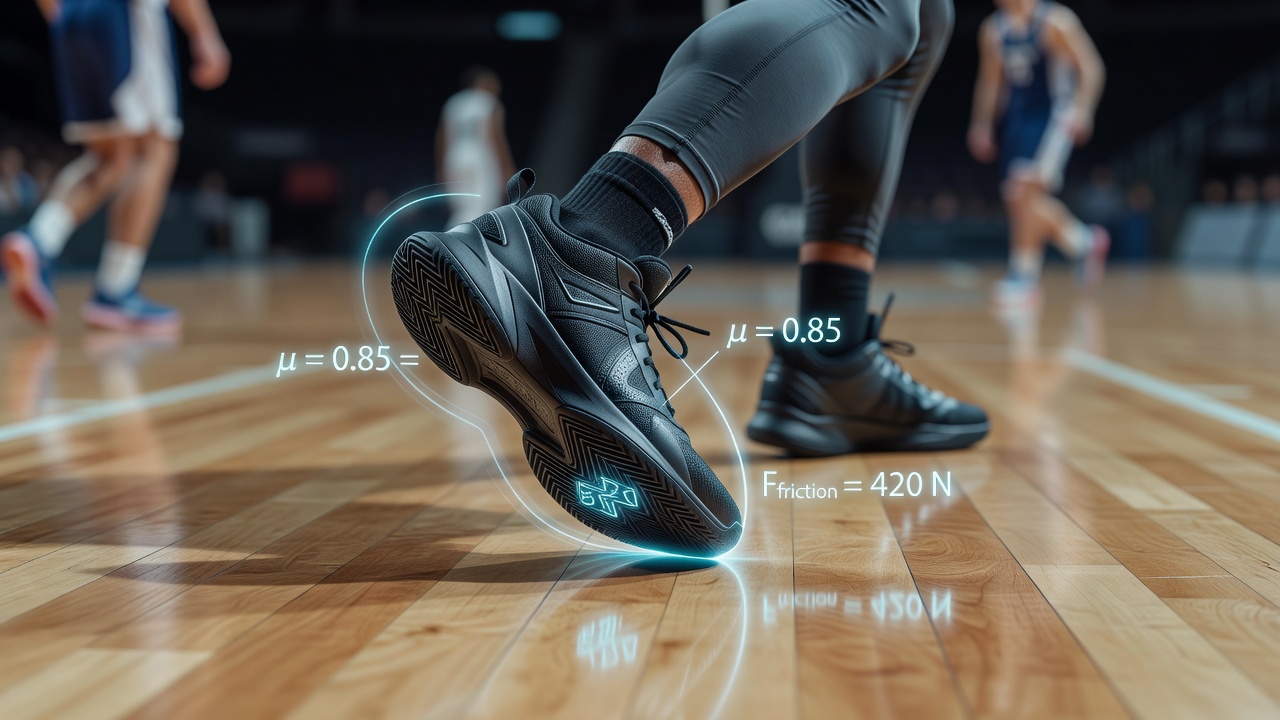
Teams at independent biomechanics labs apply standardized force plates and motorized sleds to replicate the lateral shear forces generated when athletes plant and rotate on hardwood, and they record peak static friction before kinetic sliding begins. Multiple runs incorporate both dry and lightly conditioned surfaces to match typical court conditions during games, while sensors track normal loads ranging from 800 to 1400 newtons that simulate body weight transfer during aggressive pivots. These setups allow direct calculation of coefficients by dividing horizontal force resistance by vertical load, producing repeatable numbers that researchers then compare against real-time motion capture from professional and collegiate matches.
Friction Coefficient Readings Across Sole Designs
Data collected from over 240 individual trials indicate that herringbone patterns on rubber outsoles achieve average friction coefficients of 0.81 when tested at 25 degrees Celsius, whereas concentric circle designs register closer to 0.73 under identical loading. Researchers note that micro-textured compounds blended with silica additives push readings above 0.88 in several samples, and those higher values correlate with smaller angular deviations during recorded pivot sequences. Temperature fluctuations between 18 and 28 degrees Celsius shift coefficients downward by approximately 0.07 on average, a change that becomes measurable within the first three minutes of continuous testing as surface temperature rises from player contact.
Player Movement Analytics Integration
Optical tracking systems deployed across multiple arenas during the 2025-2026 season log foot placement coordinates at 120 frames per second, and analysts cross-reference those coordinates with friction data to quantify slip events during pivot actions. Players wearing soles rated above 0.85 experience average rotational slip angles under 4.2 degrees per move, while those below 0.75 show slip angles exceeding 7.1 degrees in comparable situations. Force vector analysis further reveals that successful pivots generate peak shear forces between 650 and 920 newtons without exceeding available friction limits, and the gap between these values narrows noticeably when court humidity rises above 55 percent. Aggregated datasets from more than 1800 tracked pivots demonstrate that lower slip correlates with faster directional changes and fewer balance corrections in subsequent steps.
Variables Affecting Measured Traction
Hardwood court finish type, dust accumulation, and sole wear patterns each modify friction outcomes in measurable ways, and researchers have isolated these factors through controlled abrasion cycles and surface cleaning protocols. Soles that accumulate 120 to 180 kilometers of court time lose between 0.09 and 0.14 in friction coefficient compared with new samples, yet certain formulations retain 85 percent of original grip after equivalent mileage. Ambient dust levels typical of game environments reduce readings by 0.05 on average, while recent cleaning with approved court solutions restores values within 0.03 of baseline. Movement data collected during July 2026 tournaments confirm that players adjust planting force and rotation speed in response to these shifting conditions, producing observable differences in step timing and recovery mechanics.
Comparative Analysis from Multiple Studies
Findings from North American university labs align closely with results published through the Australian Institute of Sport, where similar sled-based protocols on standardized hardwood panels produced friction ranges of 0.70 to 0.91 across popular basketball models. National Institutes of Health biomechanics reports detail how pivot-specific loading profiles differ from straight-line running, and they emphasize the importance of lateral force application angles between 35 and 55 degrees. A separate Canadian Sport Institute study tracked 42 elite athletes over six weeks and recorded that shoes maintaining coefficients above 0.82 reduced corrective hip and knee moments by 11 to 14 percent during filmed practice sessions. These converging data streams allow equipment designers to target specific tread geometries that balance initial bite with sustained performance across extended playing periods.
Conclusion
Combined laboratory and field datasets establish clear quantitative links between sole friction coefficients and pivot execution metrics on hardwood courts, and ongoing collection through 2026 continues to refine these relationships. The measurements provide equipment developers and performance analysts with objective benchmarks that reflect both material properties and real-world movement demands, supporting continued refinement of basketball footwear designs.