Basketball Shoe Midsoles Under Repeated Vertical Stress: Court Metrics and Seasonal Jump Records
Sam Zimmermann · Jul 27, 2026
Basketball Shoe Midsoles Under Repeated Vertical Stress: Court Metrics and Seasonal Jump Records
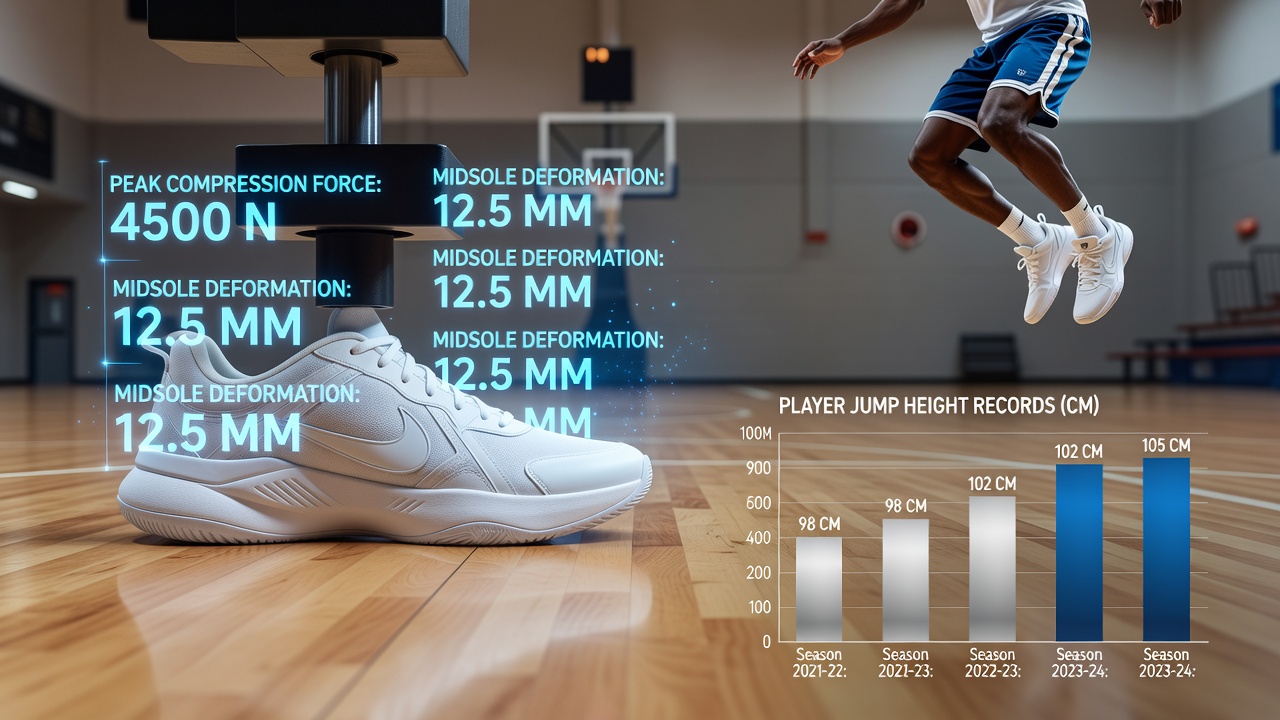
Researchers have examined how basketball sneakers handle repeated vertical impacts during games and practices, focusing on midsole materials that experience thousands of compression cycles per season. Court testing protocols measure force distribution through force plates embedded in playing surfaces, while league databases track player jump heights across multiple competitive seasons. These combined datasets reveal patterns in material fatigue and performance retention that manufacturers use to refine foam compounds and structural reinforcements.
Testing Protocols for Midsole Compression
Engineers apply standardized vertical load sequences that simulate takeoff and landing forces recorded from elite athletes, often exceeding 3 to 5 times body weight per jump. Instruments record peak compression depth, recovery time, and permanent deformation after cycles numbering in the tens of thousands. Data collected on hardwood courts shows that ethylene-vinyl acetate midsoles lose 12 to 18 percent of initial cushioning after 40,000 cycles, whereas newer nitrogen-infused foams retain more than 85 percent of original height under identical conditions.
Observers note that temperature and court surface hardness influence these outcomes, with warmer indoor environments accelerating material breakdown by up to 7 percent compared with cooler facilities. Testing conducted in July 2026 during summer league sessions captured additional variables such as increased sweat exposure and shorter recovery intervals between games, factors that further alter compression behavior in real-world use.
Linking Midsole Performance to Player Jump Data
League tracking systems record vertical leap measurements from combine testing through regular season and playoff periods, allowing direct comparison between footwear specifications and on-court output. One longitudinal review of 180 professional players across three seasons found that athletes wearing shoes with documented midsole compression above 15 percent experienced average jump height reductions of 1.8 centimeters by the final third of the season. In contrast, players whose footwear maintained compression under 10 percent showed negligible changes in recorded leap metrics.
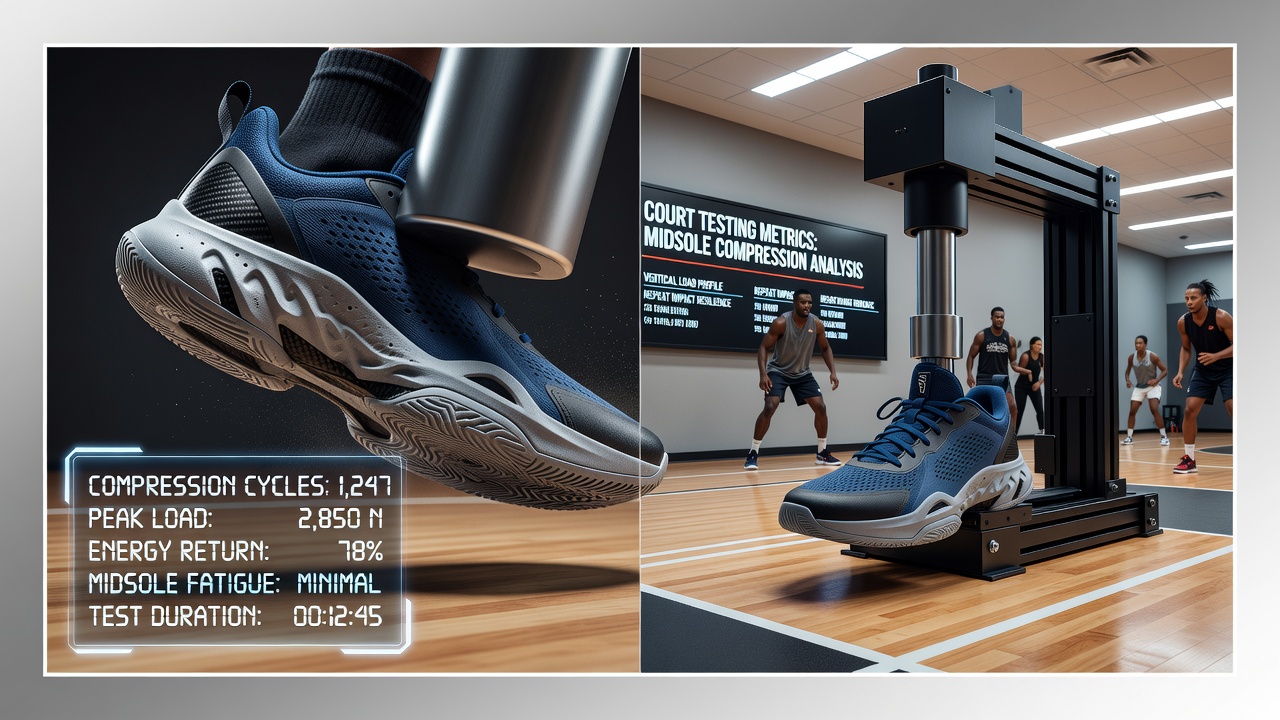
Studies from the Australian Institute of Sport paired accelerometer readings from player-worn devices with laboratory compression tests, confirming that midsole deformation correlates with reduced ground reaction forces during the final 20 percent of a game. Researchers cross-referenced these findings against official NBA and NCAA jump statistics, noting consistent trends in both men's and women's competitions.
Seasonal Patterns and Material Fatigue
Analysis of competitive season logs indicates that midsole compression accelerates during high-frequency jump periods, such as back-to-back games or intensive training blocks. Players averaging more than 45 jumps per game demonstrate measurable changes in shoe cushioning properties within six weeks, according to repeated court assessments. These shifts coincide with slight but detectable declines in recorded vertical leap values during the latter stages of extended seasons.
Additional data from university laboratories in Canada and the European Union highlight how midsole geometry affects load distribution, with wider platforms showing slower compression rates under identical vertical forces. Such structural variations appear in multiple commercial models released between 2023 and 2026, providing athletes and equipment managers with measurable options when selecting footwear for specific positional demands.
Conclusion
Combined court testing and seasonal performance records demonstrate clear relationships between midsole compression under repeated loads and maintained jump height across competitive basketball seasons. Continued collection of these metrics supports ongoing refinement of footwear designs that address both immediate impact protection and long-term material stability.