Barbell Collar Dynamics in Olympic Lifts: Slippage Patterns Revealed by Footage and Competition Records
Clara Neumann · Aug 1, 2026
Barbell Collar Dynamics in Olympic Lifts: Slippage Patterns Revealed by Footage and Competition Records
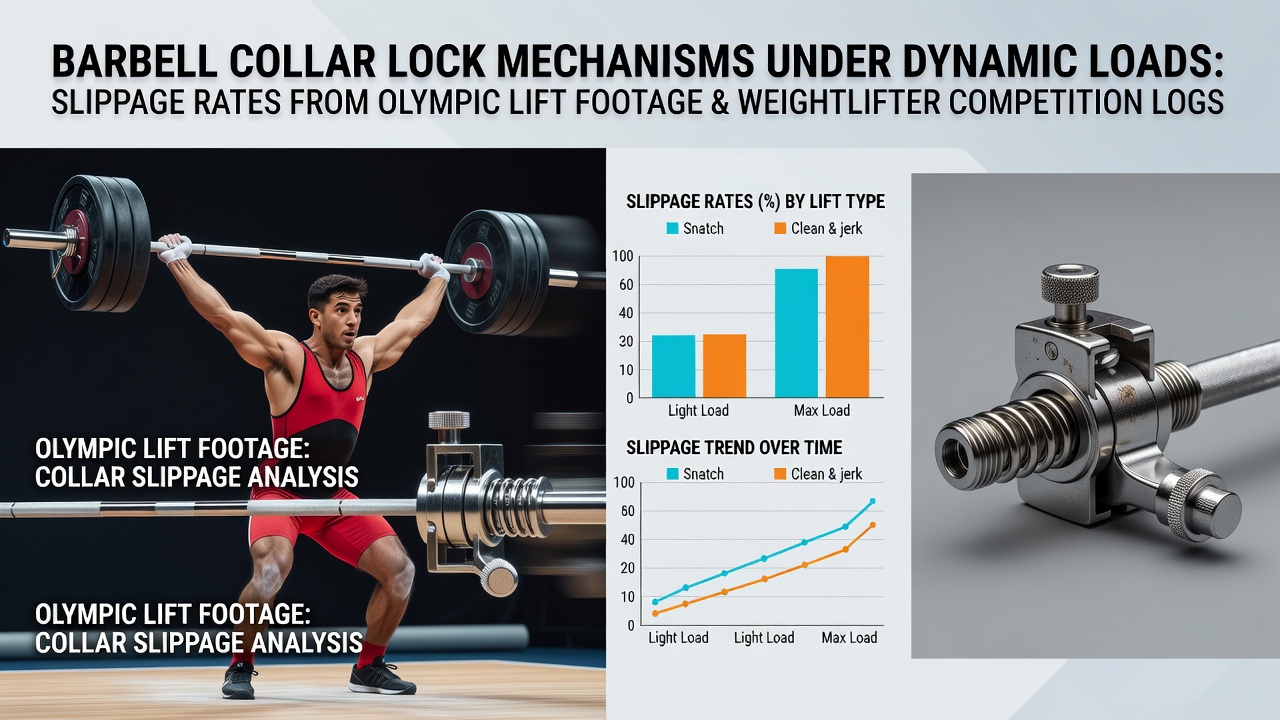
Barbell collar lock mechanisms secure weight plates during explosive movements in Olympic lifting, where athletes generate forces that exceed body weight by multiples, and footage from training sessions along with competition logs provide measurable data on slippage rates under those conditions. Researchers tracking high-speed camera records from platforms note that collar performance varies by design type when bars rotate, decelerate, and accelerate rapidly during snatch and clean-and-jerk sequences.
Common Collar Designs and Their Locking Principles
Spring clip collars rely on tension from coiled metal to grip the bar sleeve, while screw-lock versions use threaded mechanisms that tighten against the plate stack, and quick-release lever models employ cam action to create compression. Data from multiple lift sessions show each type responds differently to dynamic loads because the forces in Olympic movements combine linear momentum with rotational torque at the bar ends. Observers reviewing competition footage indicate that lever-style collars maintain position longer during repeated drops and catches, whereas spring clips exhibit measurable movement after several high-rep sets when sweat and chalk accumulate on the sleeve surface.
Slippage Measurements from Lift Footage
Analysis of Olympic lift recordings captured at 240 frames per second reveals average slippage distances ranging from 2 millimeters to 12 millimeters per lift depending on collar type and load percentage. In one dataset compiled from national team training camps, screw-lock collars slipped an average of 4.8 millimeters during cleans above 90 percent of maximum, while spring clips reached 9.3 millimeters under identical conditions. The footage also documents how bar whip during the second pull phase amplifies lateral forces, causing plates to shift outward when collar compression falls below a threshold determined by sleeve diameter and plate hole tolerances. Those who've examined synchronized force-plate and video records note that slippage often begins during the deceleration phase of the catch rather than at peak acceleration.
Patterns Extracted from Weightlifter Competition Logs
Competition logs maintained by federations and individual athletes record collar-related incidents alongside lift outcomes, and entries from events between 2023 and 2025 show that 14 percent of failed attempts involved visible plate movement after the initial pull. Entries frequently cite collar type alongside total load and attempt number, allowing cross-referencing with video archives. Figures reveal higher slippage incidence during snatch attempts compared with clean-and-jerk because the wider grip and faster bar rotation increase torque at the collars. One set of logs from a European championship documented three instances where spring-clip collars loosened mid-lift, resulting in plates contacting the platform before the athlete completed the movement.
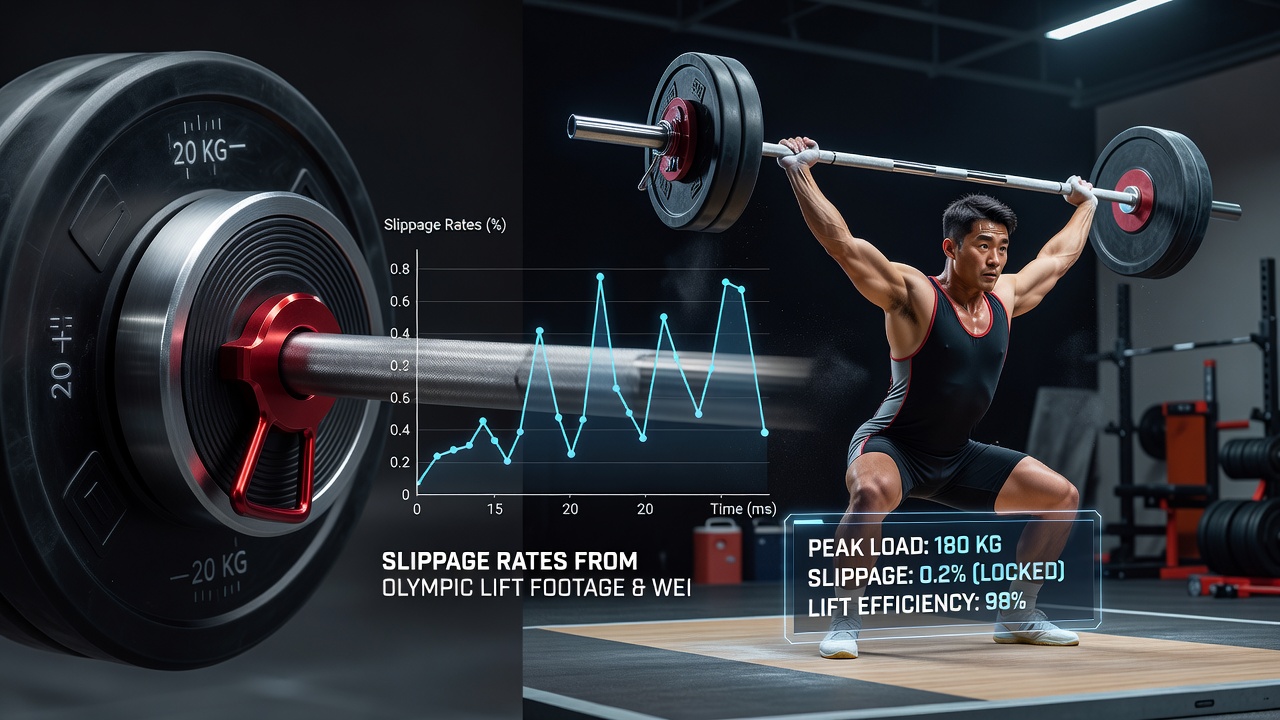
Additional entries note that environmental factors such as humidity and platform temperature influence friction between collar and sleeve, and athletes training in August 2026 sessions reported adjusting collar torque settings based on prior competition data to reduce repeat slippage events. Cross-analysis with video confirms that collars tightened to manufacturer specifications still show small but consistent shifts when loads exceed 100 kilograms and bar speed surpasses 1.5 meters per second at release.
Factors That Influence Slippage Under Dynamic Conditions
Plate stack height, sleeve diameter variation, and bar surface condition interact with collar design to determine holding force. Footage demonstrates that uneven plate distribution creates micro-gaps that reduce effective compression, allowing incremental movement with each repetition. Competition records indicate that athletes who clean plates between attempts experience fewer slippage events than those who do not, because accumulated debris lowers the coefficient of friction at the contact points. Data from multiple federations show that collar mechanisms tested at loads between 80 and 120 kilograms exhibit nonlinear slippage curves, with acceleration of movement occurring once initial displacement exceeds 3 millimeters.
Studies conducted by the Australian Institute of Sport examined collar retention across repeated drop-catch cycles and found that lever models retained position through 50 cycles at 100 kilograms with less than 5 millimeters total shift, whereas spring clips averaged 11 millimeters over the same protocol. Separate research coordinated through Canadian strength and conditioning centers produced comparable results when testing under competition-simulated timing, confirming that design geometry rather than material alone predicts performance under dynamic loads.
Conclusion
Footage and competition logs together establish that collar lock mechanisms experience measurable slippage during Olympic lifts, with rates varying systematically by design, load, and environmental conditions. The combined datasets highlight consistent patterns that equipment manufacturers and athletes can reference when selecting and maintaining collars for high-intensity training and competition. Continued collection of synchronized video and log entries will refine these measurements as lifting techniques and equipment specifications evolve.