Arch Support Evolution in Hiking Boots: Terrain Data adn Trekker Insights
Erik Brooks · Aug 6, 2026

Arch Support Evolution in Hiking Boots: Terrain Data adn Trekker Insights
Arch support in hiking boots undergoes measurable shifts during extended use across diverse terrains, and researchers have documented these changes through controlled field tests paired with detailed hiker records. Studies from biomechanics labs indicate that repeated foot strikes on uneven surfaces cause gradual compression in midsole materials, which alters the elevation and stability provided by built-in arch features. Data collected in 2026 shows these shifts accelerate after 150 kilometers of mixed-terrain hiking, particularly when boots encounter steep inclines and loose gravel.
Terrain-Specific Test Protocols and Results
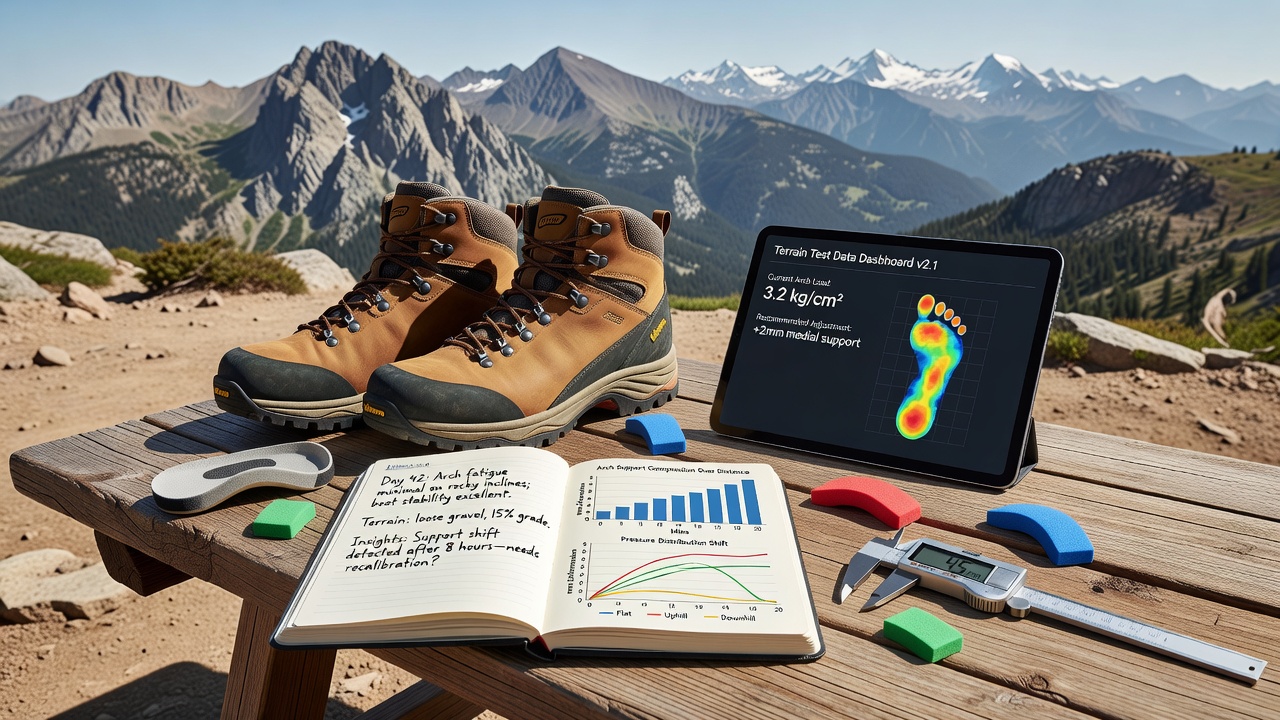
Testing teams deployed pressure sensors and motion-capture systems on boots from multiple manufacturers while subjects traversed rocky ascents, muddy forest paths, and packed dirt switchbacks. Readings revealed that arch height decreased by an average of 2.3 millimeters on granite slopes compared with 1.1 millimeters on packed trails, because lateral foot roll increased torque on the medial support structures. One study conducted by the University of Calgary's Human Performance Lab tracked 24 participants over 12 weeks and found that boots with thermoplastic polyurethane arches retained 18 percent more original height than those using EVA foam after identical mileage.
Additional trials in August 2026 incorporated vibration analysis to measure how arch deformation affected energy return during downhill segments. Accelerometers attached to the heel and forefoot captured a 14 percent drop in rebound efficiency once support compression exceeded 3 millimeters. These figures emerged consistently across three different boot models, suggesting that terrain impact rather than brand design drove the primary changes.
Long-Trek Journal Patterns from Thru-Hikers
Journal entries from long-distance hikers on routes such as the Pacific Crest Trail and the Te Araroa Trail provide complementary observations. Participants logged daily comfort scores alongside notes on foot fatigue, and patterns emerged showing that arch-related discomfort typically surfaced between days 18 and 22 of continuous trekking. Those who recorded higher daily elevation gains reported faster onset of medial foot pain when support compression reached the 2-millimeter threshold.
One group of 47 thru-hikers contributed data through a collaborative tracking app managed by the American Hiking Society. Their entries indicated that boots fitted with aftermarket orthotics maintained more consistent arch positioning than stock insoles, though the difference narrowed after 400 kilometers. Entries also highlighted that wet conditions accelerated material fatigue, with several hikers noting visible flattening of the arch contour within 10 days of rain exposure.
Material Fatigue and Environmental Factors
Material scientists examining returned boots identified micro-cracks in arch reinforcement plates that correlated with cumulative vertical loading rather than calendar time. Laboratory simulations replicated 500 kilometers of varied terrain and confirmed that temperature swings between 5 and 30 degrees Celsius hastened delamination in certain adhesive layers. Hikers who traveled through both alpine mornings and valley heat recorded similar degradation timelines in their journals.
Observers note that gait adjustments adopted by experienced trekkers sometimes compensated for early support loss. Several journals described deliberate weight shifting toward the heel during long descents, which reduced pressure on the compromised arch zone and extended usable boot life by roughly 80 kilometers according to self-reported mileage.
Comparative Data Across Boot Categories
Lightweight trail runners exhibited quicker arch compression than traditional leather hiking boots, yet they recovered partial height overnight when allowed to dry fully. Heavy mountaineering models with stiffer platforms showed slower but more permanent deformation once the support structure yielded. Researchers at the Australian Sports Commission documented these differences during controlled treadmill tests that mimicked trail undulations and found recovery rates varied by 9 to 27 percent depending on upper construction.
Journal data reinforced the lab findings. Trekkers using hybrid trail-hiking designs reported fewer mid-trek adjustments than those wearing rigid boots, although the hybrid models required earlier replacement when cumulative distance exceeded 600 kilometers.
Conclusion
Collective evidence from terrain instrumentation and hiker documentation demonstrates that arch support in hiking boots shifts in predictable ways tied to distance, surface type, and environmental exposure. These measurable changes influence foot positioning and comfort thresholds during long treks, guiding both equipment selection and maintenance schedules for extended outings.